
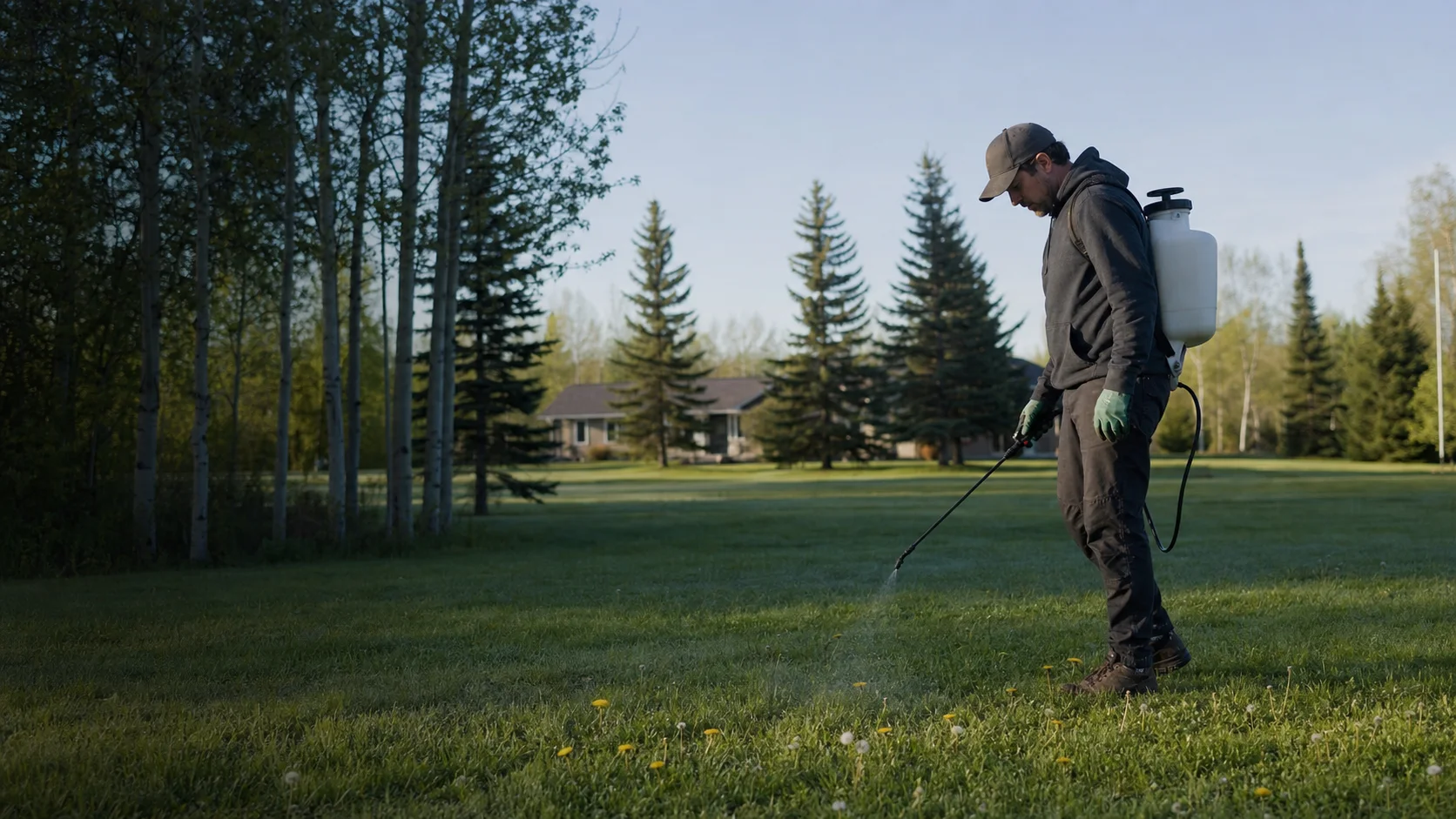
KILL THE WEEDS.KEEP THE GRASS.
We spray the broadleaf weeds in your lawn and leave the grass alone. Dandelion, thistle, clover and plantain, dying off in about two weeks.
Weeds only: Selective spray. It kills the dandelions, not your grass.
Free re-spray: Weeds still there, or back? We spray it again. Free.
Priced off your lawn: We measure your lawn off the map. No sales visit at your door.
Local crew
Fort St. John & the Peace
Free re-spray
If the weeds come back
Weed Control service
Dandelions today. A clean lawn in two weeks.
We spray the weeds in your lawn. They die. The grass stays.
Dandelion, thistle, clover and plantain take over a Peace Region lawn every summer. We hit them with a selective spray. It kills the weed and leaves the grass alone.
Heavy weed pressure does not clear in one pass. Thistle and dandelion come back from the root. We tell you that before we spray, and if they come back after a treatment we re-spray free.
- Broadleaf weeds killed down to the root
- Whole lawn sprayed, edges and fence lines included
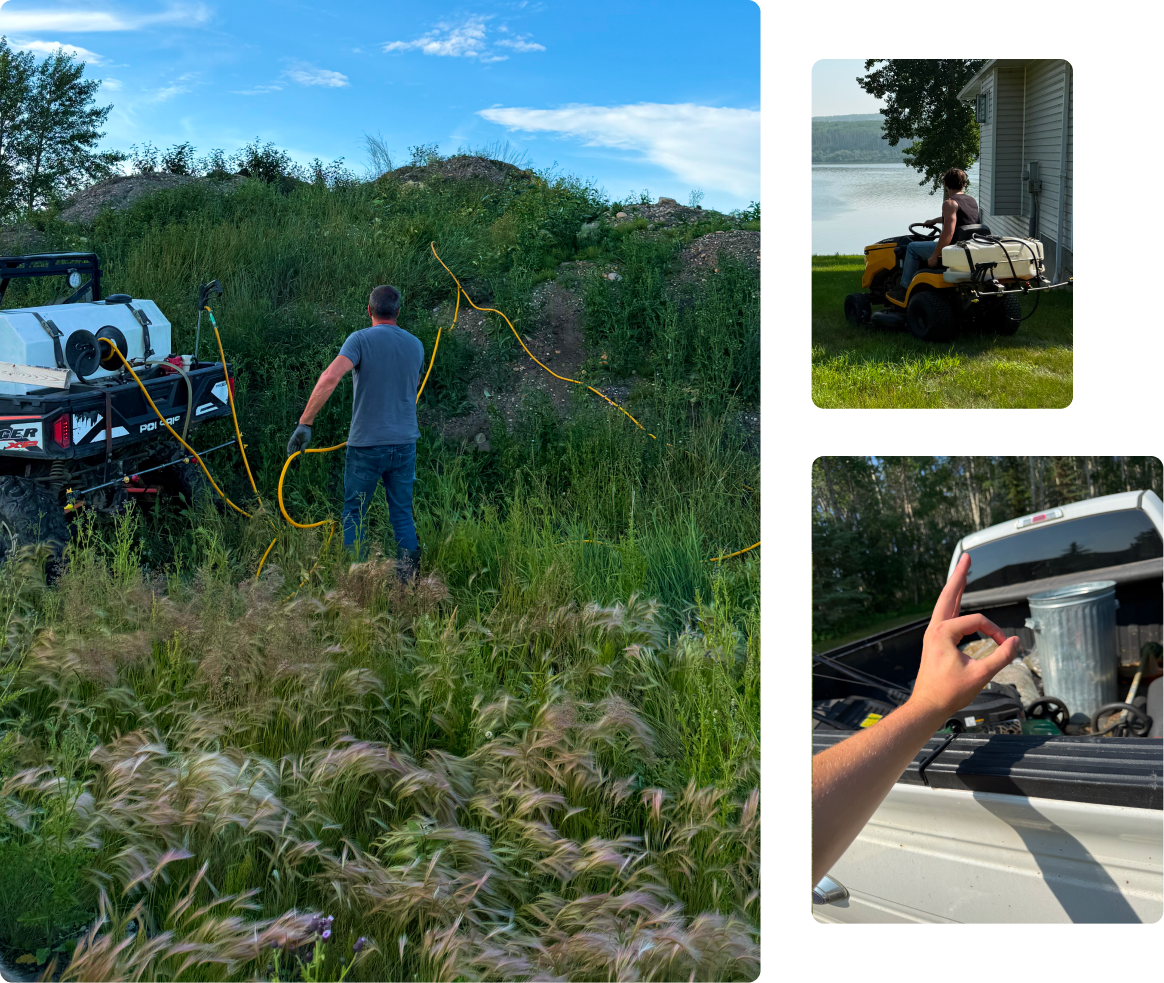
- Backpack sprayer for town lots, truck unit for acreage
- One treatment or the whole season. No contract.
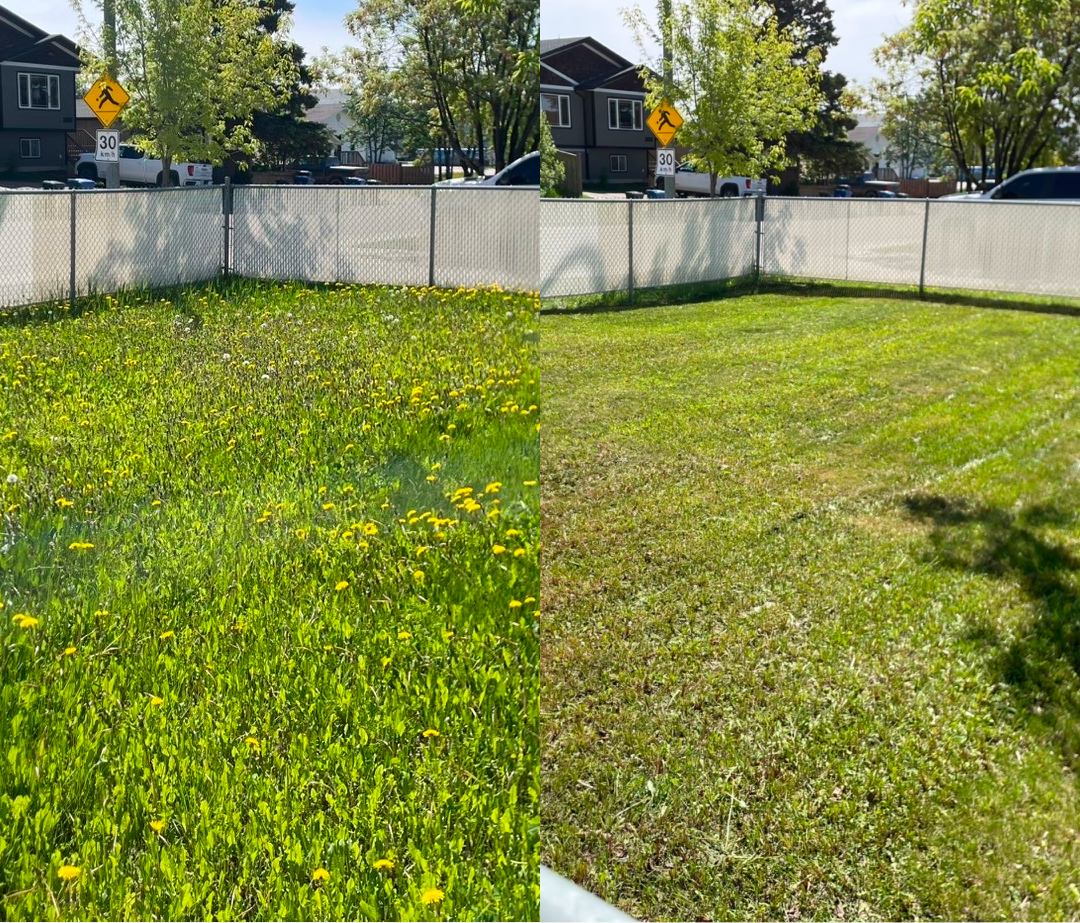
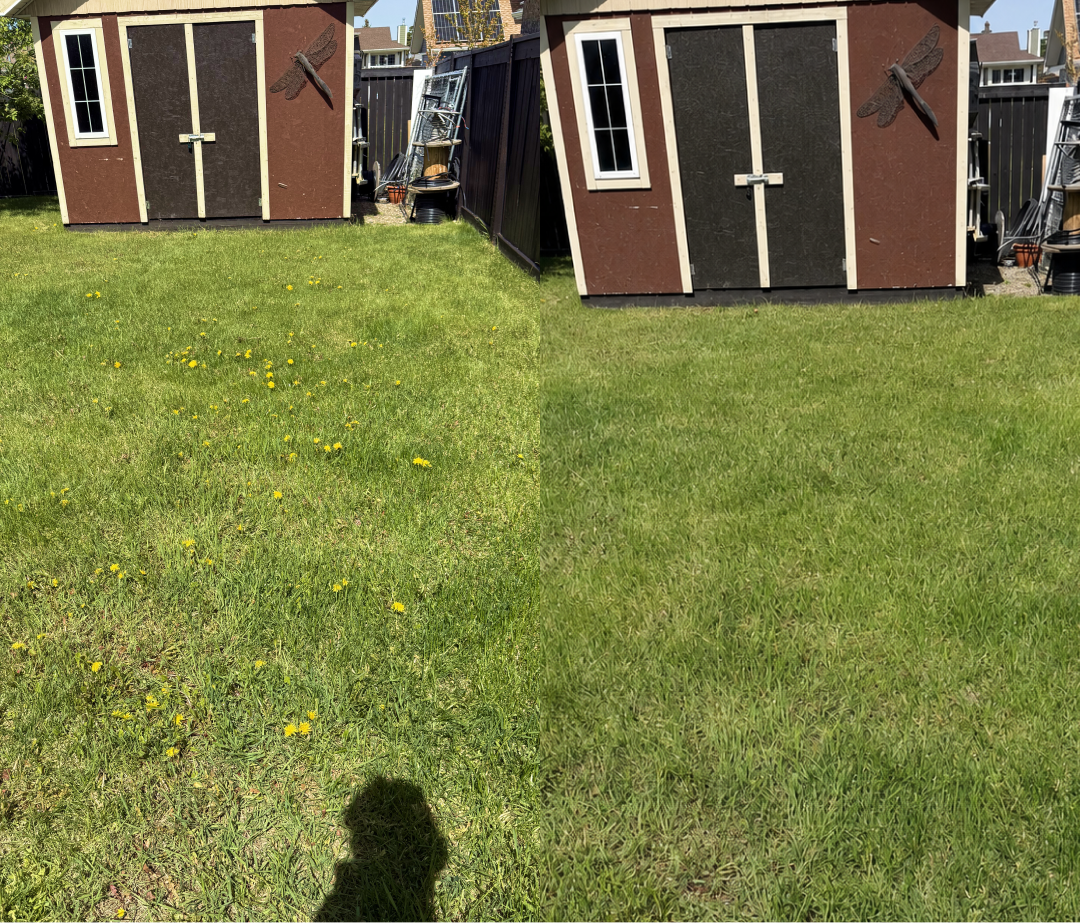
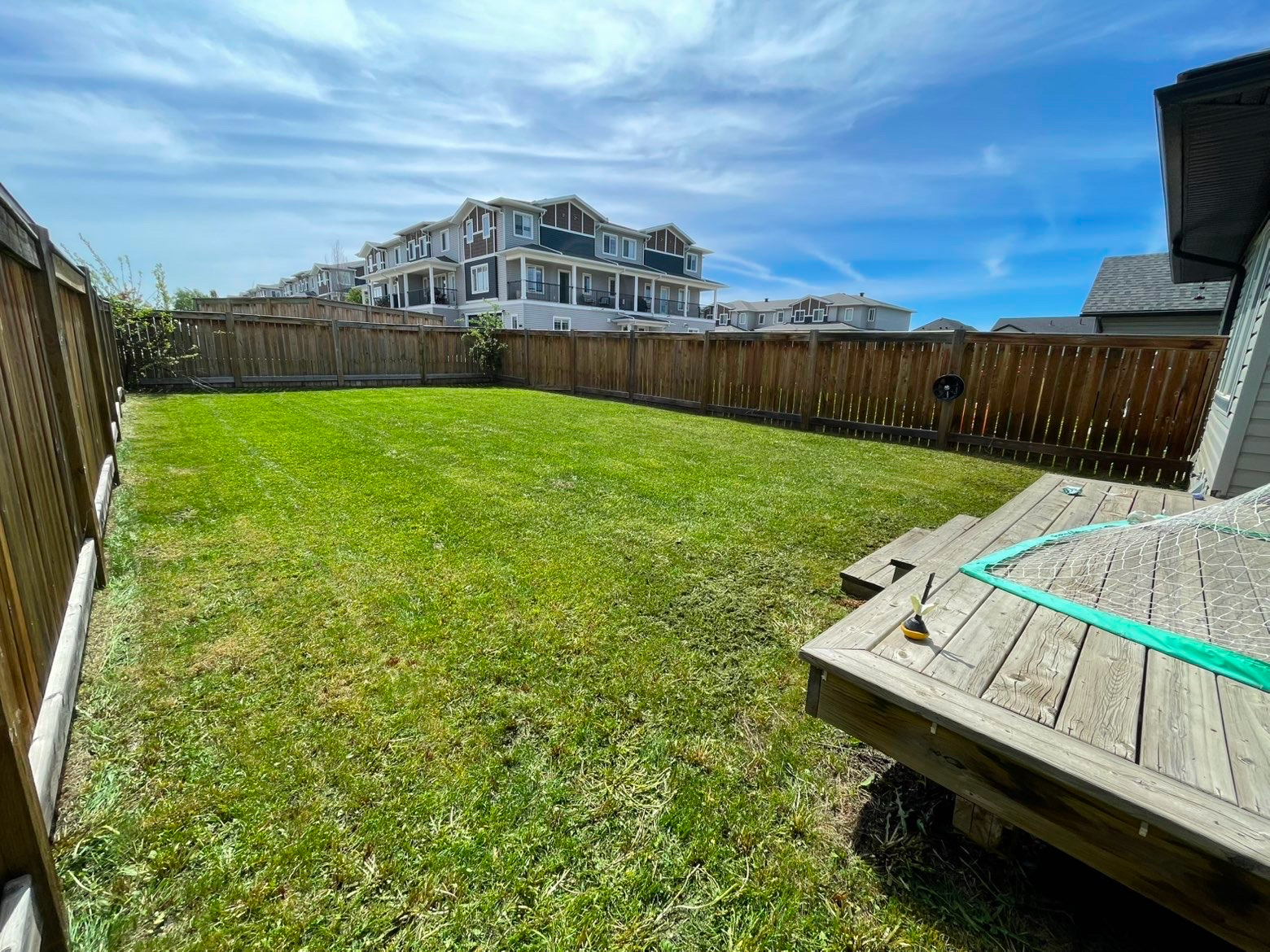
What's in your lawn
Four signs it's time to spray
Walk your lawn. See any of these? A mower won't fix it. It cuts the flower off and leaves the root.
Yellow heads all over in June
Every dandelion you leave flowers, seeds and blows across the block. That is next summer's crop.
You pull them and they come back
A dandelion taproot runs a foot down. Snap the top off and it grows straight back from what's left.
Thistle creeping in along the fence
Canada thistle spreads underground from the edges. Once it hits open lawn it moves fast.
Clover and plantain in the thin spots
Weeds take bare ground first. Thin grass is an open invitation.
Local lawn result
The lawn tells the story
A real Peace Region lawn. Weather, water and its starting shape affect the result.
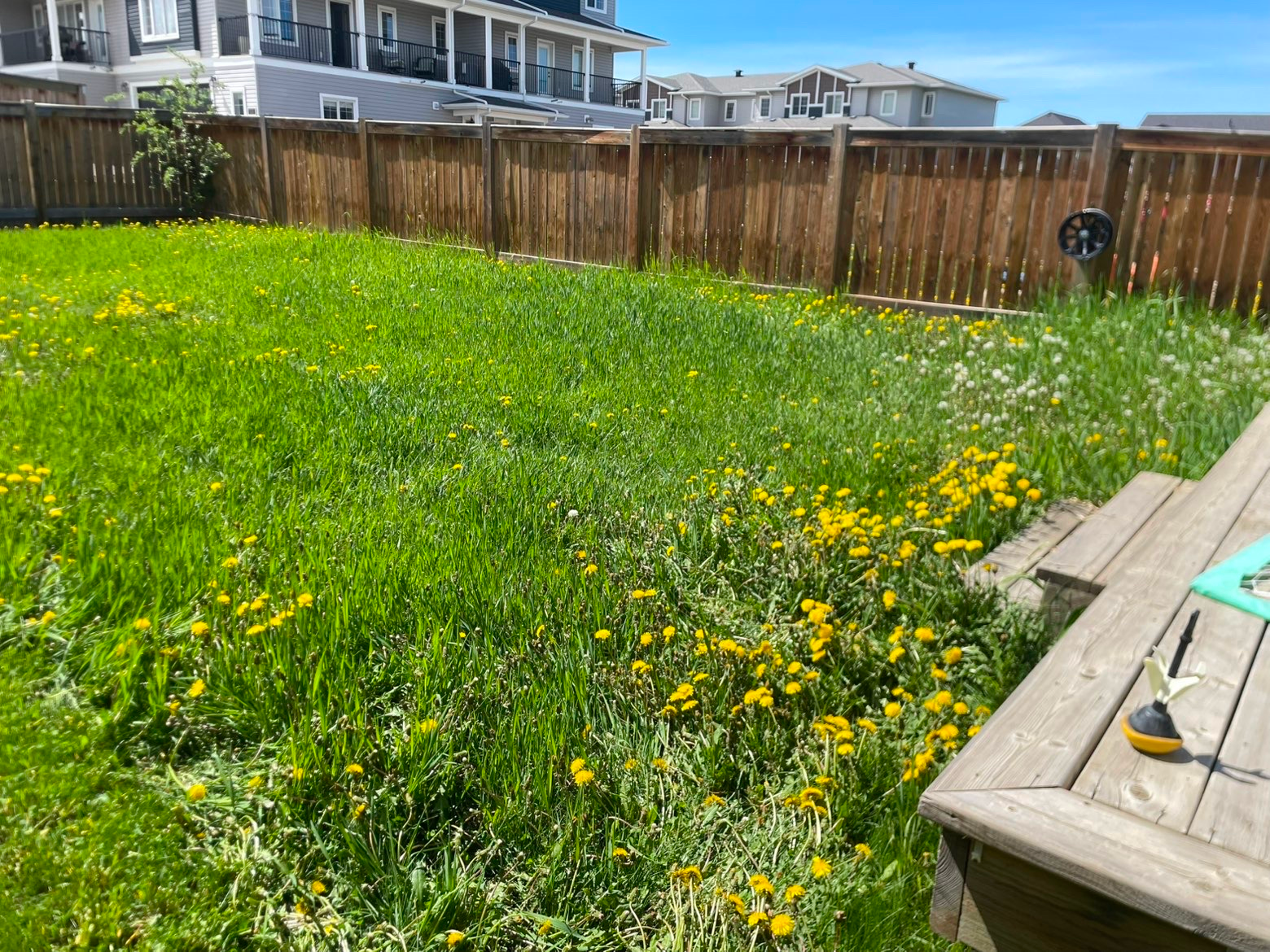
Weeds and thin grass before care
The same yard after steady care
How we spray
We spray the weed, not the lawn.
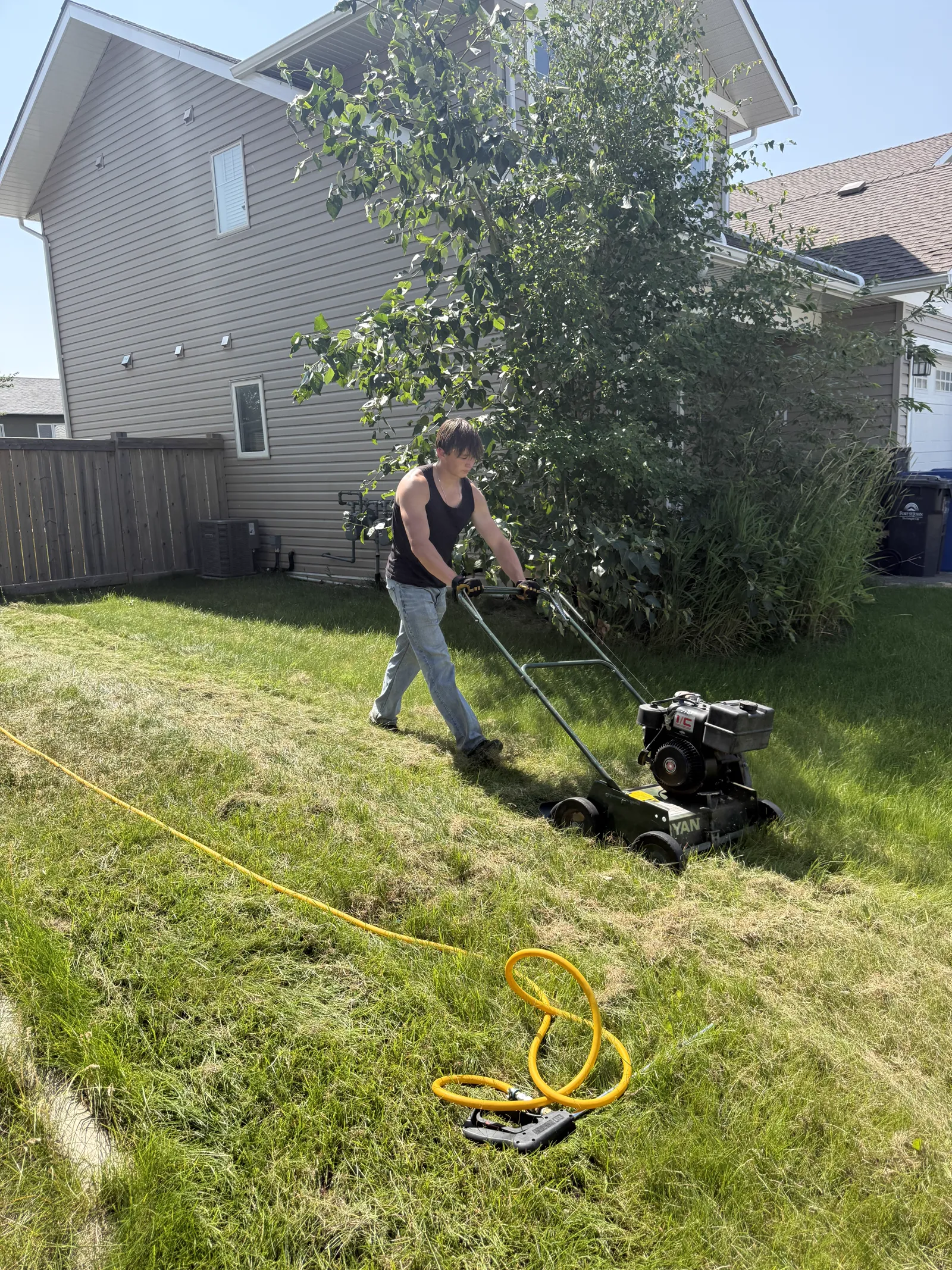
Selective control, mixed for your yard
Selective herbicide hits broadleaf weeds and leaves grass alone. We mix it at label rate for the size of your lawn. We spray the whole yard, edges and fence lines included, because that is where weeds start. We go when the weeds are actively growing, so the product travels down to the root. Town lots get the backpack sprayer. Acreage gets the truck unit.
The hardware-store way
The Dead Weed way
What to expect
Minutes to book. Two weeks to see it.
You don't have to be home. You don't buy anything. You don't sign a contract. We bring the water, the product and the machine.
Type in your address. We measure the lawn off the map and show you the number. No phone tag, no salesman at your door.
We book you in. Leave the gate unlocked and pull the dog toys and lawn chairs off the grass.
Lawn, edges, fence lines. We text you when it's done and tell you how long the grass needs to dry.
Curling in a few days. Dead in about two weeks. Still standing? Call us and we re-spray it free.
Our guarantee
Weeds still standing? We come back free.
If the weeds are still there after we spray, or they come back, we come back and spray it again. You pay nothing. Call 250-793-9031 and we book it.
- You don't pay twice. The re-spray costs nothing.
- You don't sign a contract to get it.
- You don't have to be home for it.
- You don't have to prove anything. Tell us the weeds are back.
Testimonials
Fort St. John homeowners recommend Dead Weed
Published five-star Google reviews from local customers whose experience matches this page.

 Posted on Google
Alexis
Jun 14, 2026
“Super professional and they do a great job. Prices were very reasonable and communication was quick. Would defiantly recommend!”
Read this review on Google Posted on Google
Levi Jackson
Jun 11, 2026
“Excellent weed control service. Showed up on time, explained the process, and within a couple of weeks the weeds were dying off while the lawn stayed healthy. Reliable and easy to deal with. Would definitely recommend.”
Read this review on Google Posted on Google
Kaleb Francoeur
Jun 10, 2026
“Amazing service from a very hard working young man. Great prices for his work and is very flexible with his times, 100% recommend.”
Read this review on GoogleFAQ
Weed Control, answered
What does it cost?
A one-time treatment starts at $65 and goes up with the size of your lawn. Put your address into the online estimate and you'll have your exact number in minutes. Nobody has to come out to price it.
Will it kill my grass?
No. The spray is selective. It goes after broadleaf weeds and leaves grass alone, and we mix it at label rate for the size of your lawn.
How many treatments will I need?
Most lawns clear with one. Heavy thistle or dandelion needs a second pass a few weeks later, and we tell you which one you've got before we spray. If they come back after a treatment, that re-spray is free.
When can my kids and dogs go back on the lawn?
Once the grass is dry. We text you when the spray is done and tell you how long that takes that day.
Do I have to sign up for a season plan?
No. Book one treatment if that's all you want. Nothing renews on you. Plenty of people spray once in June and call it good.
Your lawn, minus the dandelions.
Put in your address. See your price. Pick a day. If the weeds come back, so do we. Free.
Free re-spray if they come back →