KILL WHAT'SKILLING YOUR LAWN.
We pull the turf back, show you what's eating your grass, and kill it. Still spreading after we spray? We come back free.
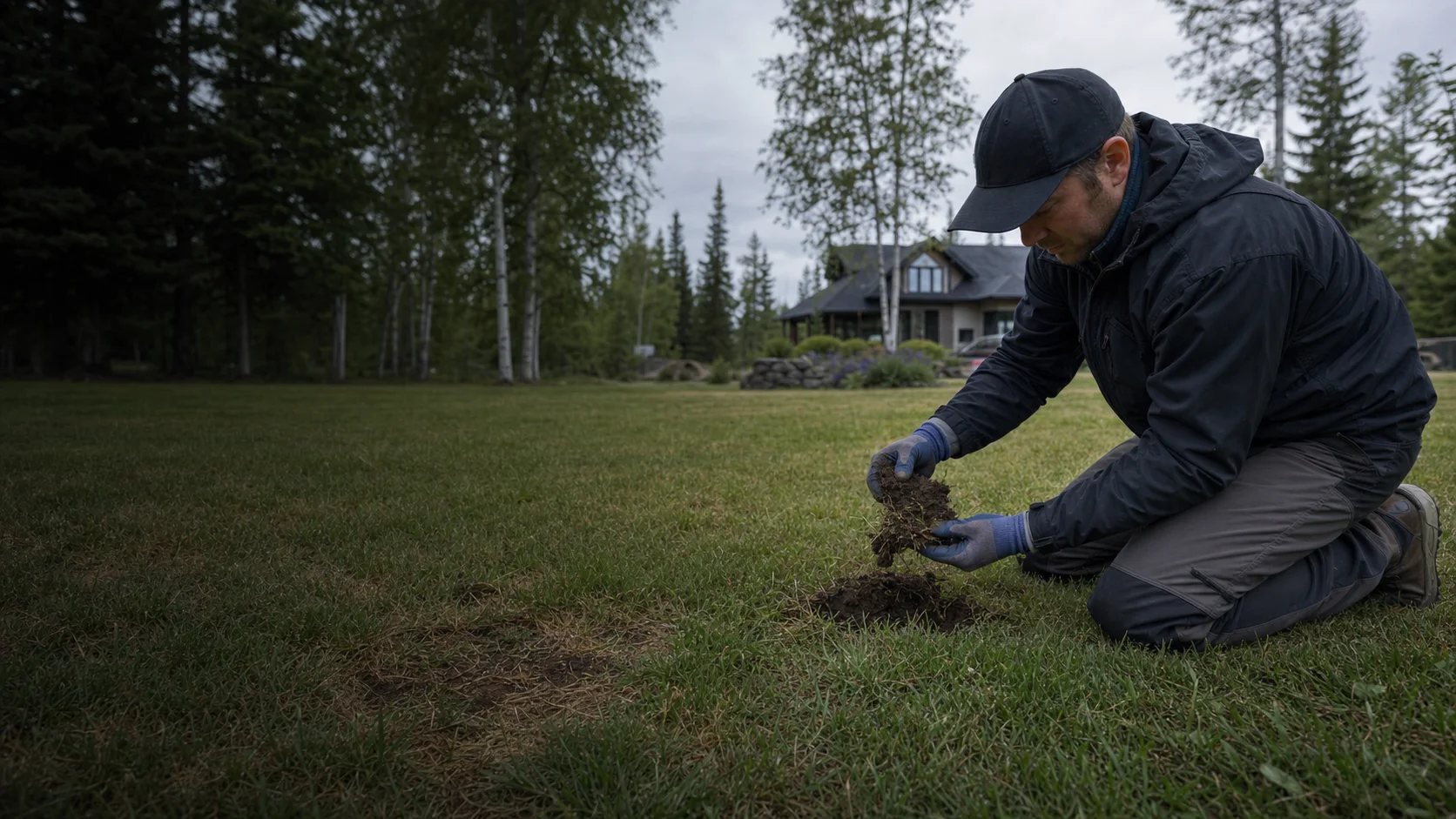
We look first: We lift the turf at the patch and check the roots before we spray anything
Price in minutes: Put in your address — the estimate measures your lawn off the map
Nothing to buy: We bring the product, the sprayer and the truck
Local crew
Fort St. John & the Peace
Free re-spray
If the weeds come back
Lawn Insect Control service
Most people water the patch. The bugs keep eating.
Grubs and chinch bugs kill grass from the roots up. Watering does not stop them.
Grubs chew the roots off underneath. Chinch bugs work the crown and take the hot, dry strip along a driveway or a south wall first. Both leave brown patches that look exactly like drought.
So we look before we spray. We lift the turf at the edge of the damage and check the root zone. If the insects are in there, you see them with us. If they are not, we say so and tell you what is really killing the grass.
- We lift the turf at the patch edge and check the roots
- We treat the insect we find, not a guess at what it might be
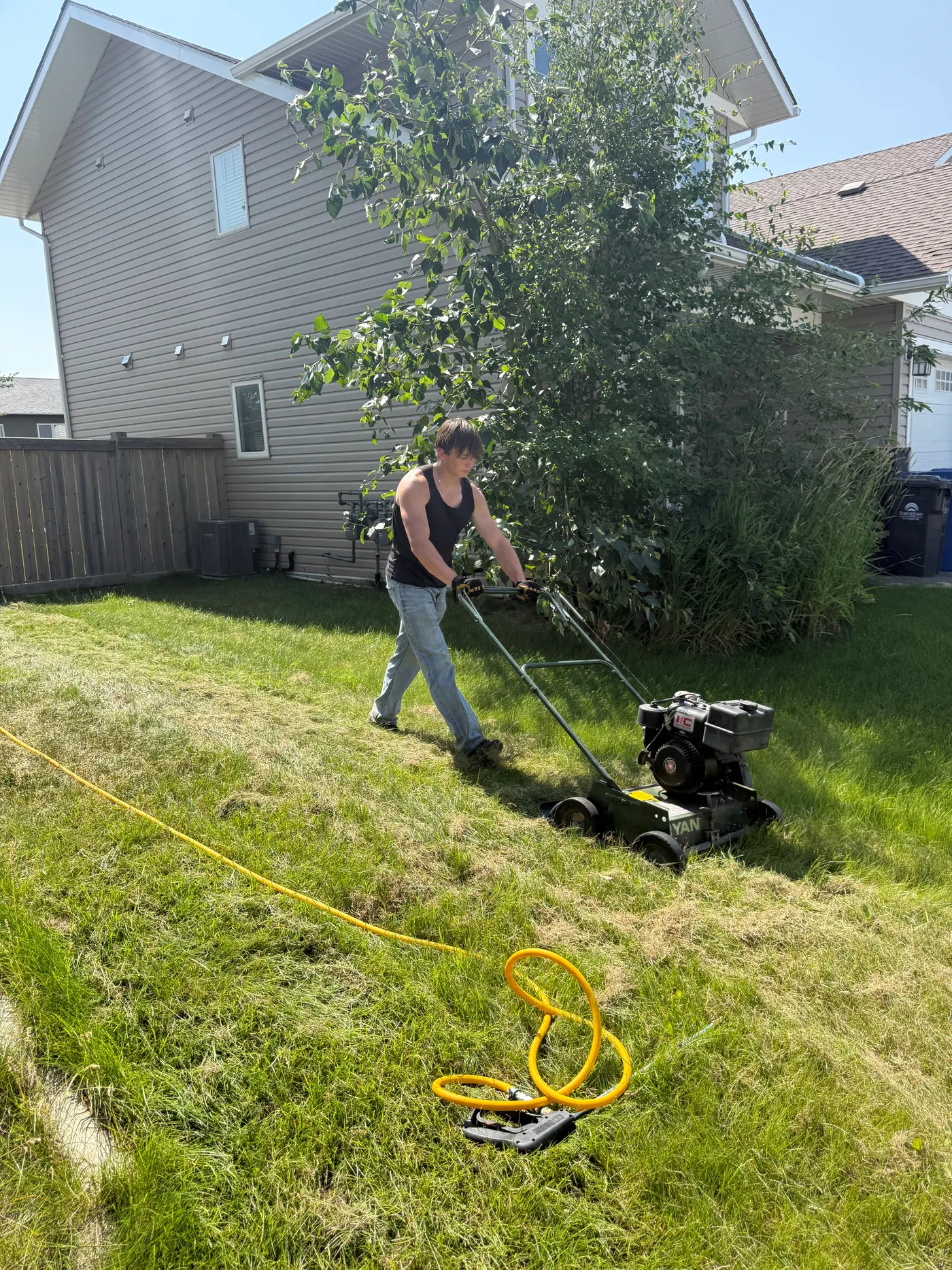
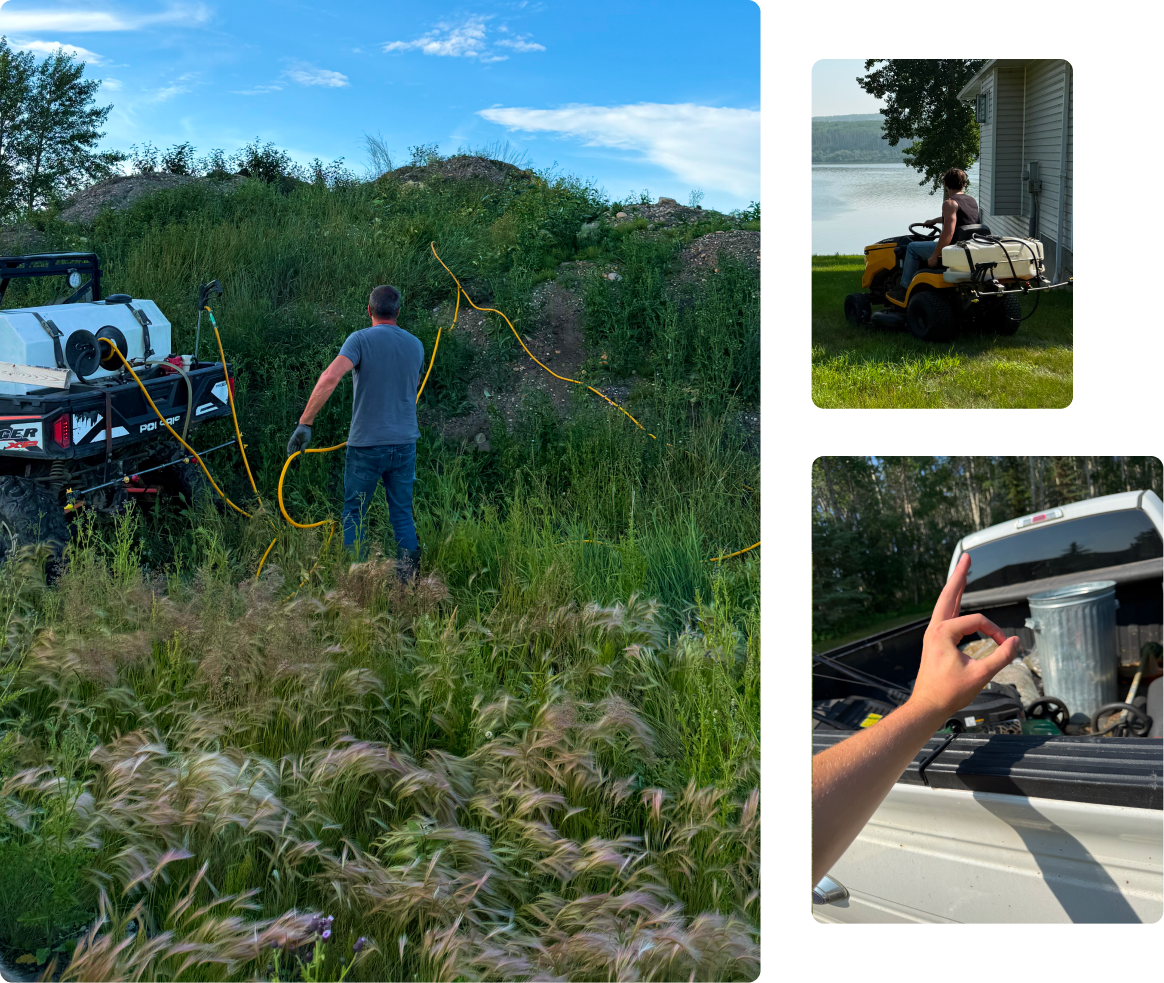
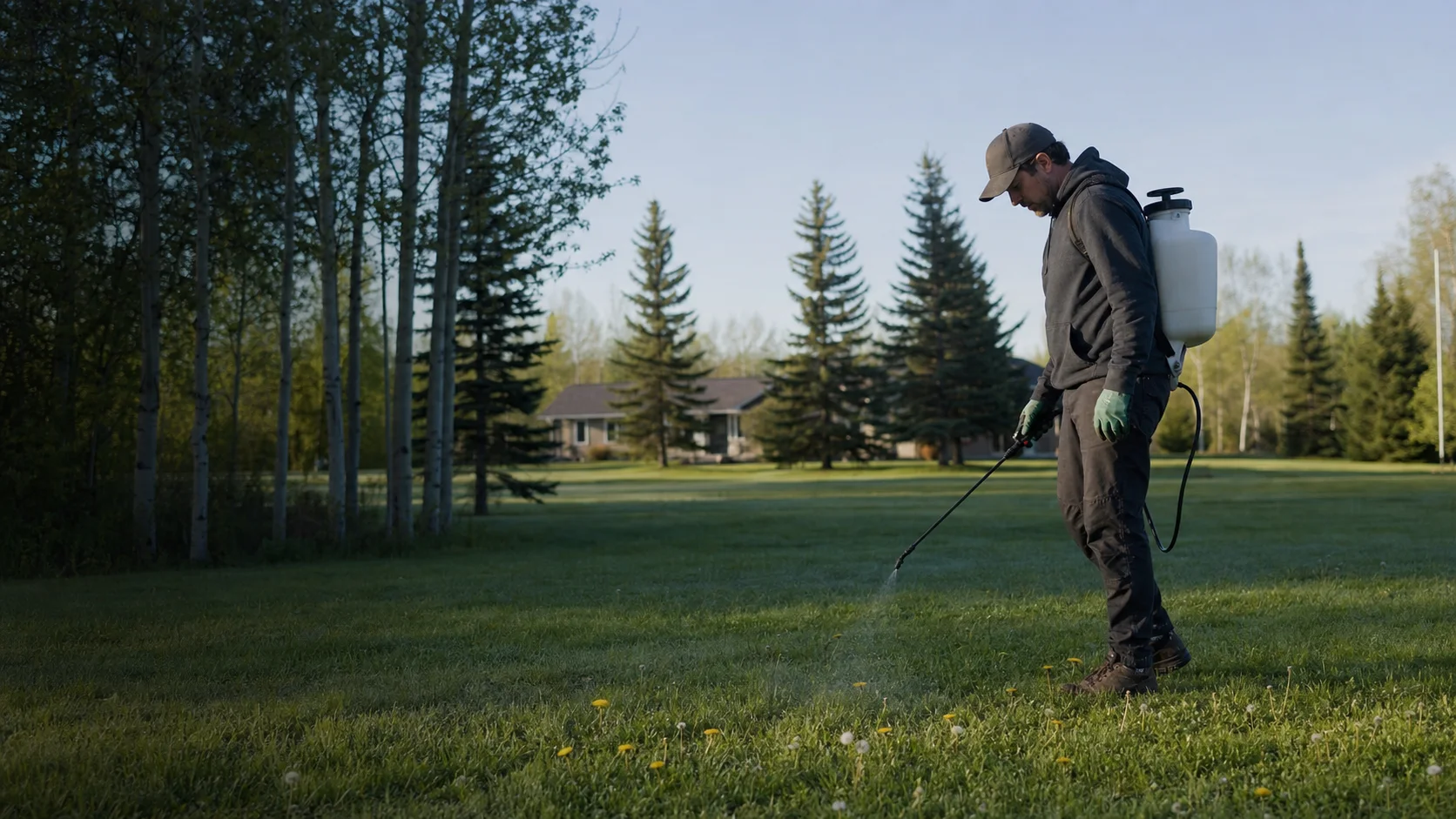
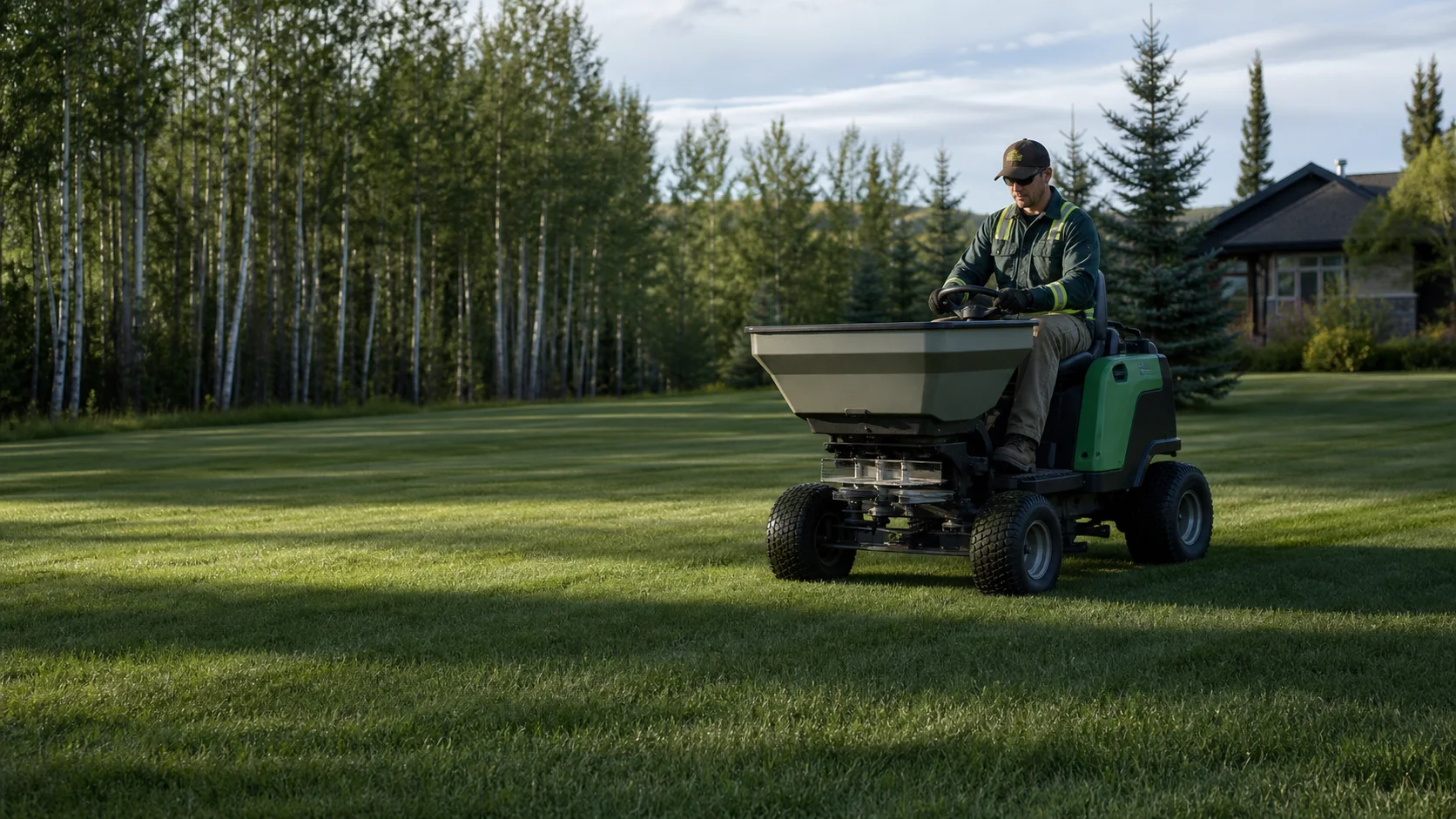
- Backpack sprayer for one patch, truck-mounted unit for a whole lawn
- Still spreading after the treatment? The re-spray is free
Bugs or drought?
Six things that say bugs, not drought
Water a dry lawn and it comes back. Water a lawn with grubs in it and nothing changes. Walk out and check these first.
The patch pulls up like carpet
Grubs eat the roots off. Grass with no roots lifts off the soil in your hand.
The brown spreads in blobs, not lines
Drought browns the high, dry ground first. Insect damage grows outward from one spot.
Crows and skunks keep tearing up the yard
They are digging for grubs. Fresh holes overnight mean something down there is worth eating.
It is worst along the driveway or a south wall
Chinch bugs take the hottest, driest strip of lawn first. That is where you see it start.
You watered it properly and nothing changed
Two weeks of real watering brings drought stress back. If the patch is still dying, water was never the problem.
The dead area is bigger than it was last week
Heat stress holds its shape. Insect damage keeps moving.
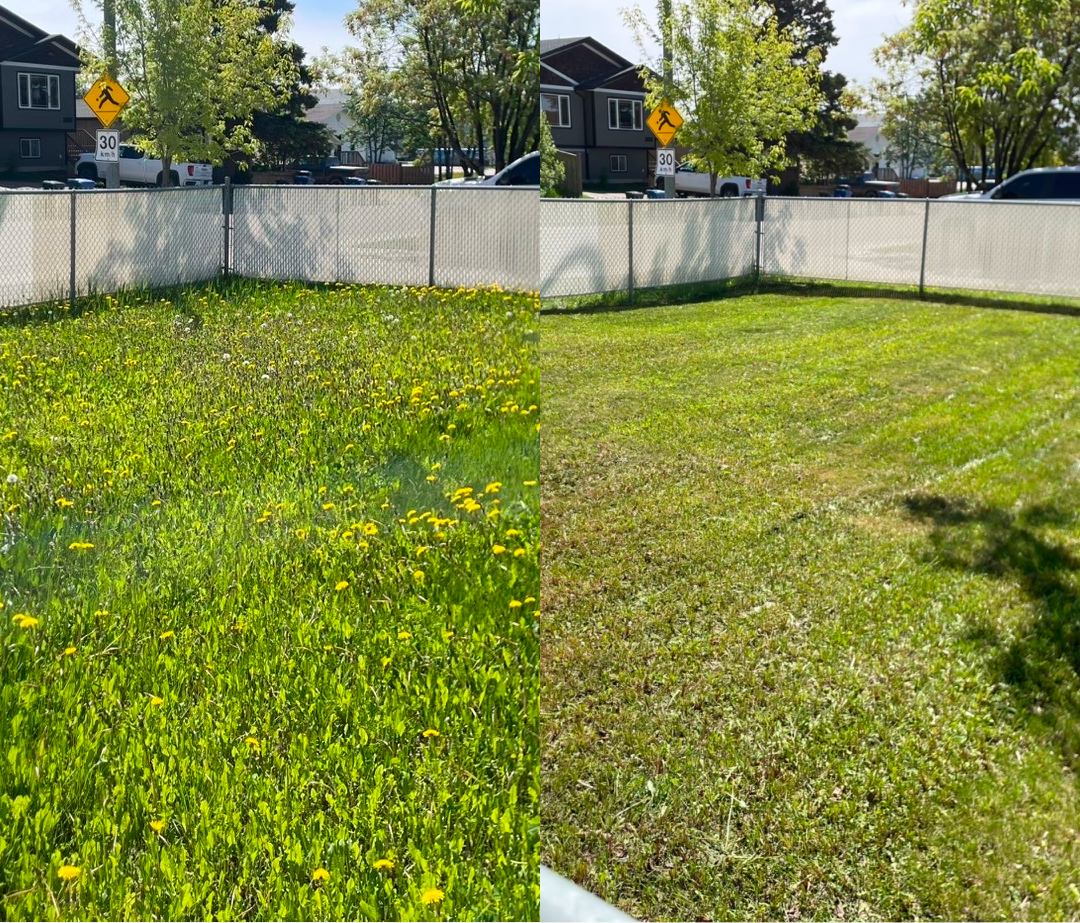
Local lawn result
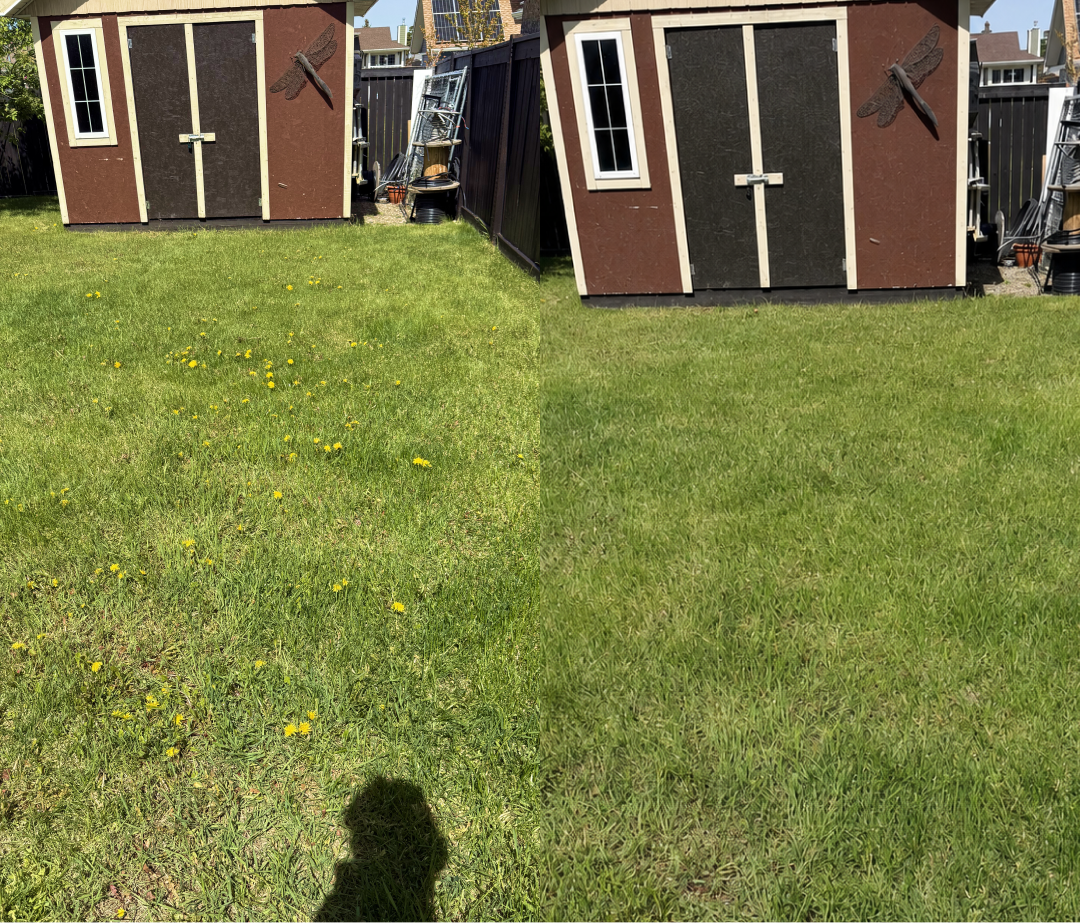
The lawn tells the story
A real Peace Region lawn. Weather, water and its starting shape affect the result.
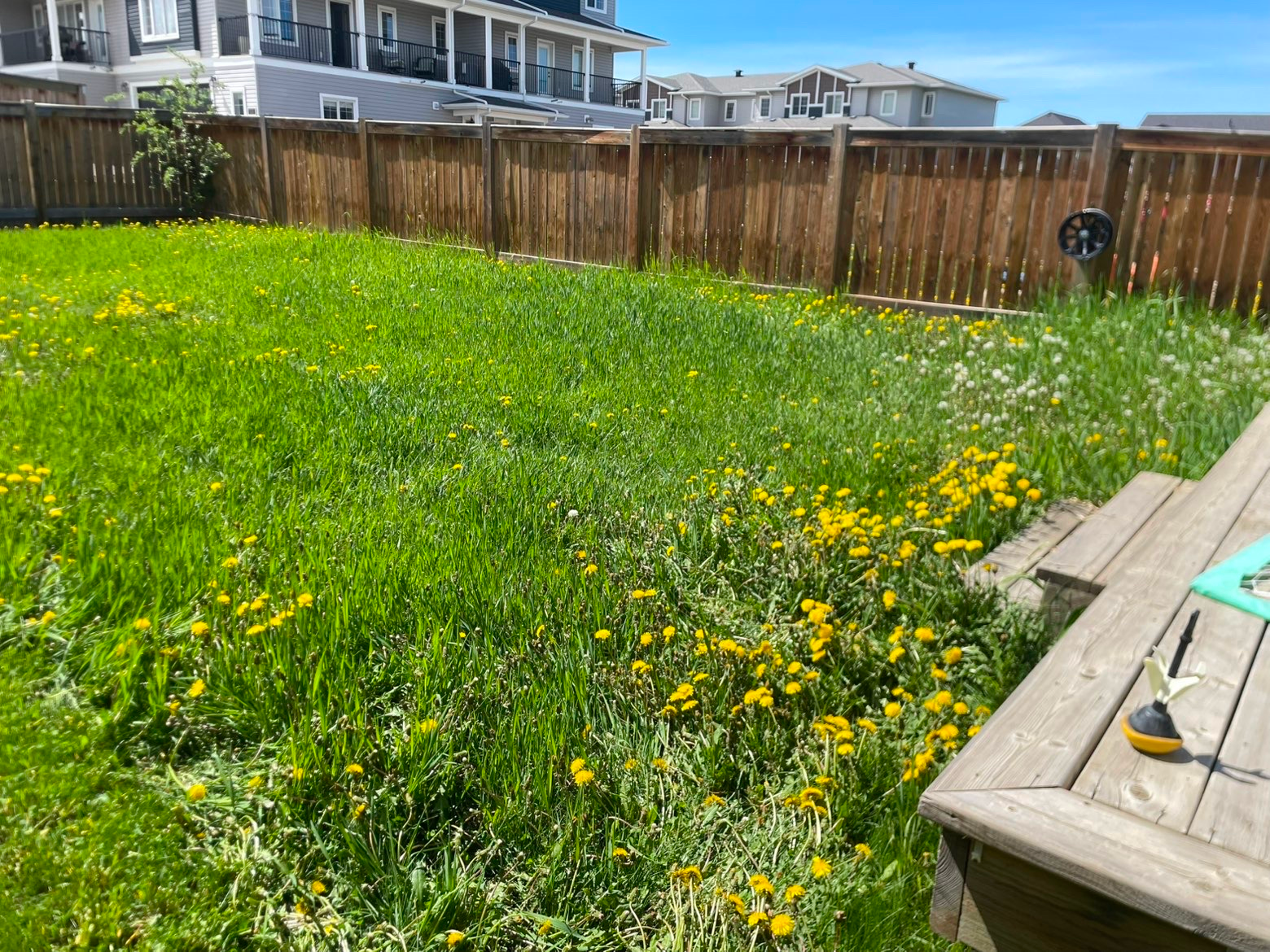
Weeds and thin grass before care
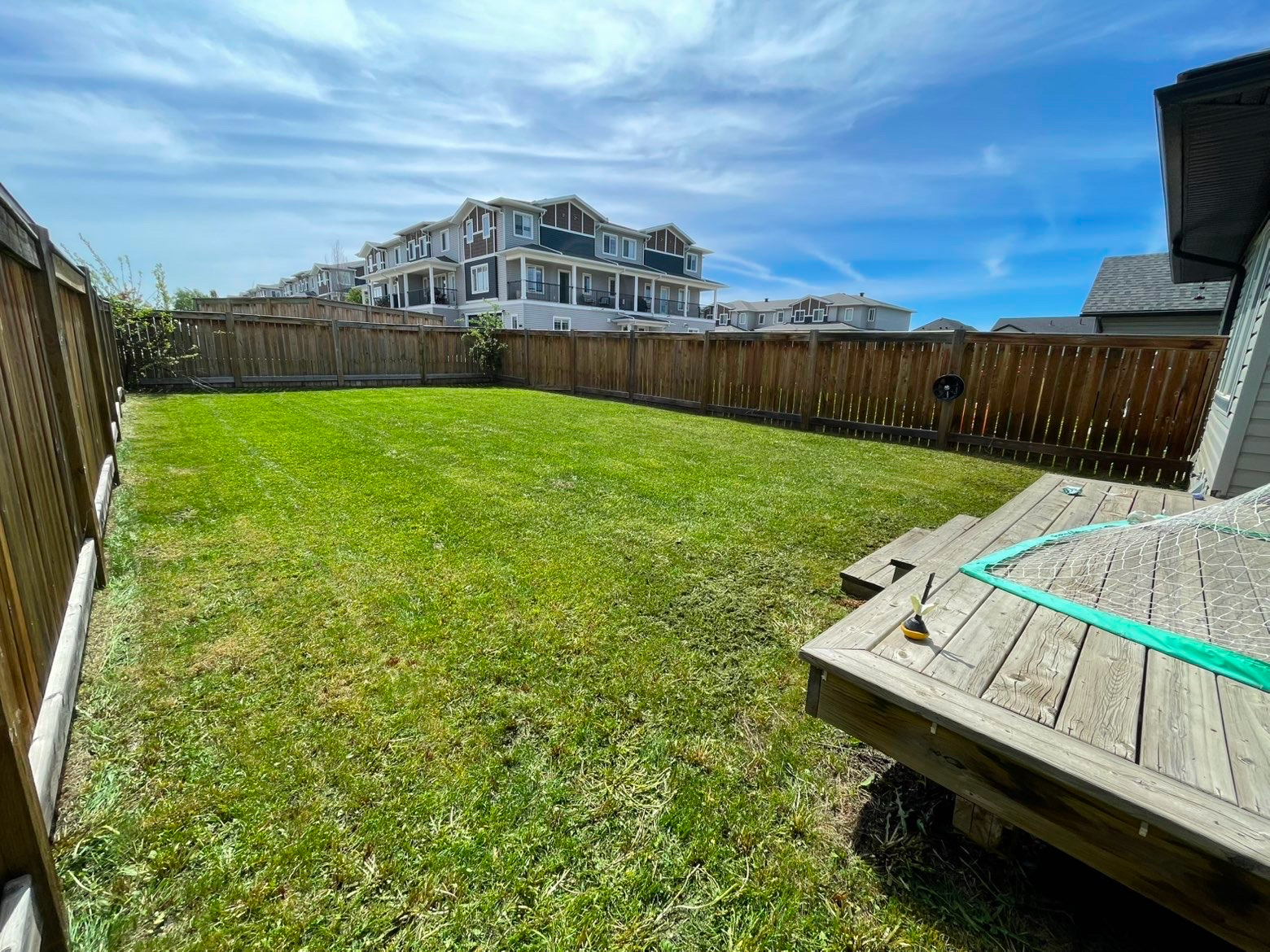
The same yard after steady care
How we treat it
We check the roots before we touch the lawn.
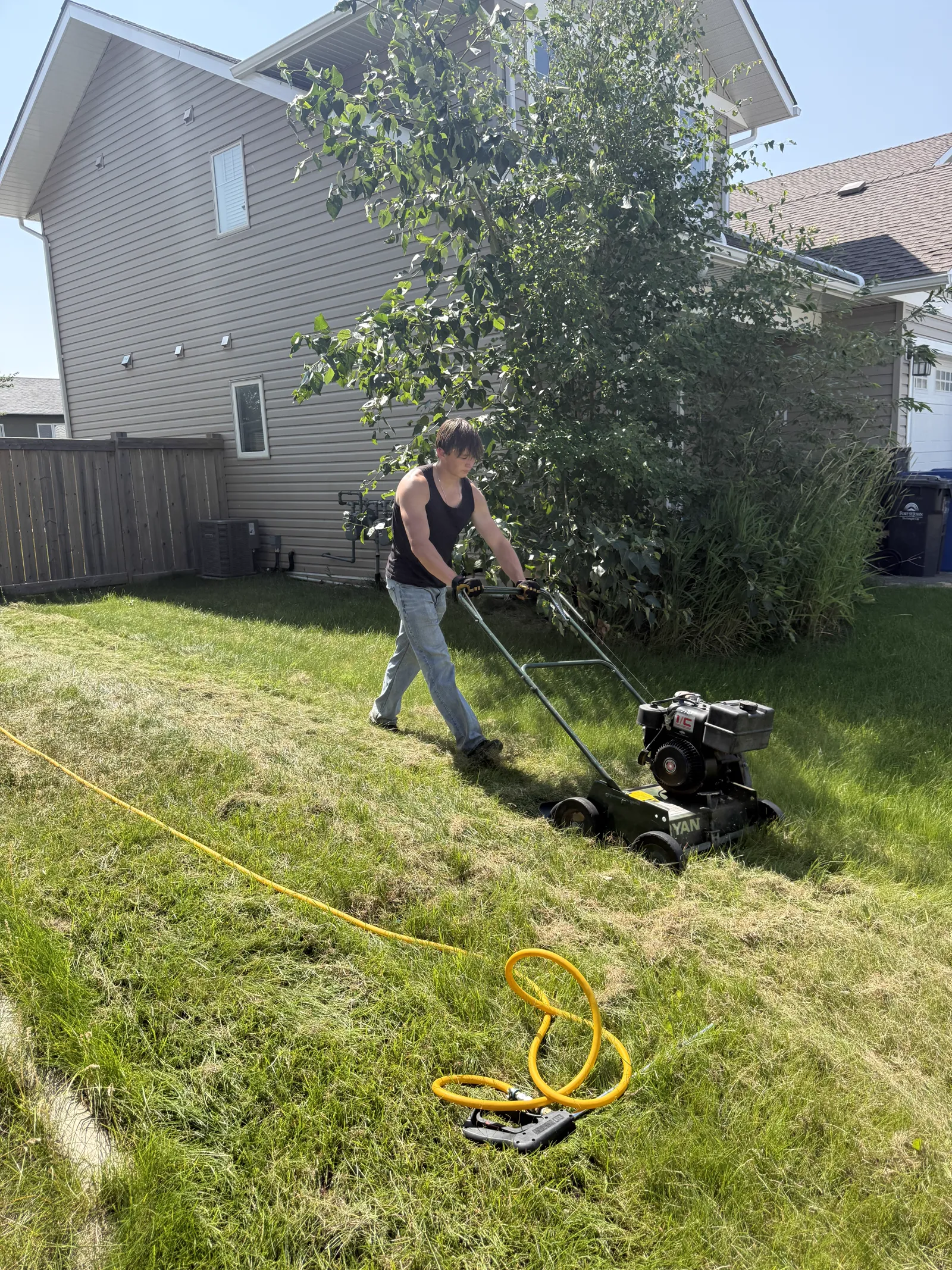
We kill the insect. We leave the grass alone.
We cut a small flap of turf at the edge of the damage and turn it back. Grubs sit in the top inch of soil. Chinch bugs run when you part the grass. What we find picks the product and the area — the whole lawn when the bugs are through all of it, the patch plus a margin when they are not. Then we tell you exactly what we found.
A bag of grub killer from the store
The Dead Weed way
What to expect
Send a photo. Get an answer. Get it sprayed.
The damage stops when the insect does. Grass that is already dead will not green up overnight — the lawn fills the patch back in with new growth over the following weeks.
Text or email a picture and tell us when it started. That photo usually tells us what we are looking at before we drive out.
We lift the turf at the edge of the damage and look. Then we tell you what we found — insects or not.
Backpack sprayer for one patch, truck-mounted unit for a whole lawn. Once it is dry the lawn is yours again.
Our guarantee
Bugs still eating your lawn? We come back free.
If the damage is still there — or comes back — after a treatment, we come re-spray it free. You call, we come.
- You don't sign a contract
- You don't have to be home
- You don't buy anything — we bring the product and the sprayer
- You don't pay a second time for the re-spray
Testimonials
Fort St. John homeowners recommend Dead Weed
Published five-star Google reviews from local customers whose experience matches this page.

 Posted on Google
Alexis
Jun 14, 2026
“Super professional and they do a great job. Prices were very reasonable and communication was quick. Would defiantly recommend!”
Read this review on Google Posted on Google
Cyprus Palfy
Jun 10, 2026
“Did a great job, definitely getting again”
Read this review on Google Posted on Google
Kohrin Owe
Jun 10, 2026
“So well done! Incredible service and everything I asked for was flawless.!!! Definitely using this business coming forward”
Read this review on GoogleFAQ
Lawn Insect Control, answered
What does it cost?
Price comes off your lawn size and how much of it is chewed up. Start with the instant estimate — it measures your lawn off the map, so we are working from real numbers instead of a guess. We confirm the number with you before we spray, and the price we say is the price you pay. Rather talk to a person? Call 250-793-9031.
How do you know it's bugs and not drought?
We pull the turf back at the edge of the patch and look at the root zone. Grubs and chinch bugs are right there when they are there. If we don't find any, we tell you, and we tell you what we think is really killing the grass.
Will the brown grass turn green again?
Not overnight. Killing the insect stops the damage, then the lawn fills the patch in with new growth over the following weeks. Chewed-out spots sometimes need seed on top. We will tell you if yours does.
Is it safe for my kids and the dog?
Keep everyone off the lawn until it is dry. After that it is a lawn again. We message you when we finish, so you know when the clock started.
What if the patch keeps spreading after you spray?
Call 250-793-9031 and we come re-spray it free. No contract, no argument.
Find out what's eating your lawn.
Send us a photo of the patch. We'll tell you what's eating it and what it costs to kill. 250-793-9031.
Free re-spray if they come back →