Our Process

GET STARTED WITHDEAD WEED:WHAT TO EXPECT

"The job decides the setup. The customer should always know what happens next."

Dead Weed, Taylor, BC field standard

3 steps to get started

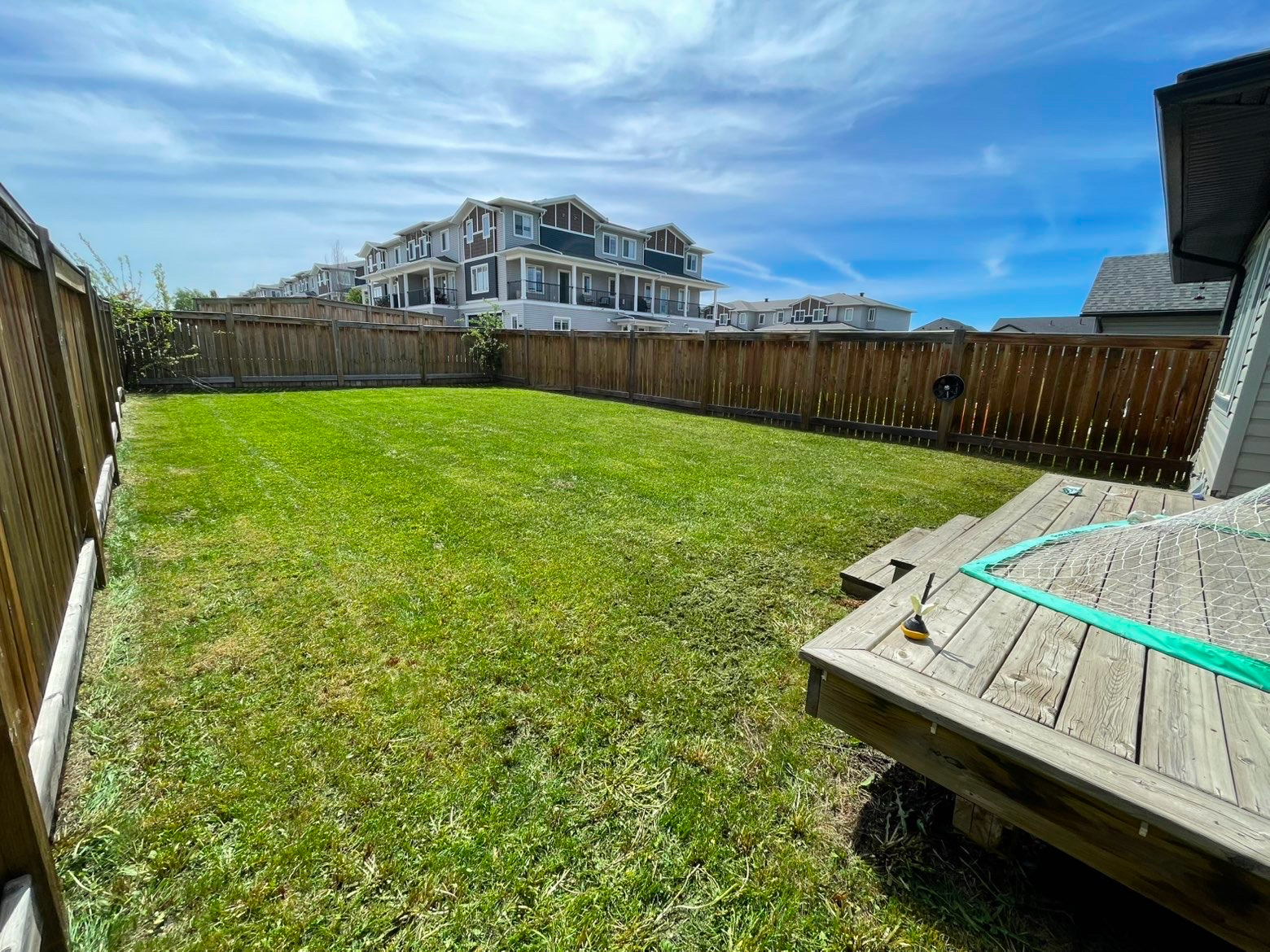
  1. 1Show us the property
  2. 2Confirm the scope
  3. 3We bring the right unit

The full service path

From first look to follow-through.

Understand the ground, select the right unit and material, communicate clearly, then stay accountable for the visit.

Before the visit
About 5 minutes

Step 01

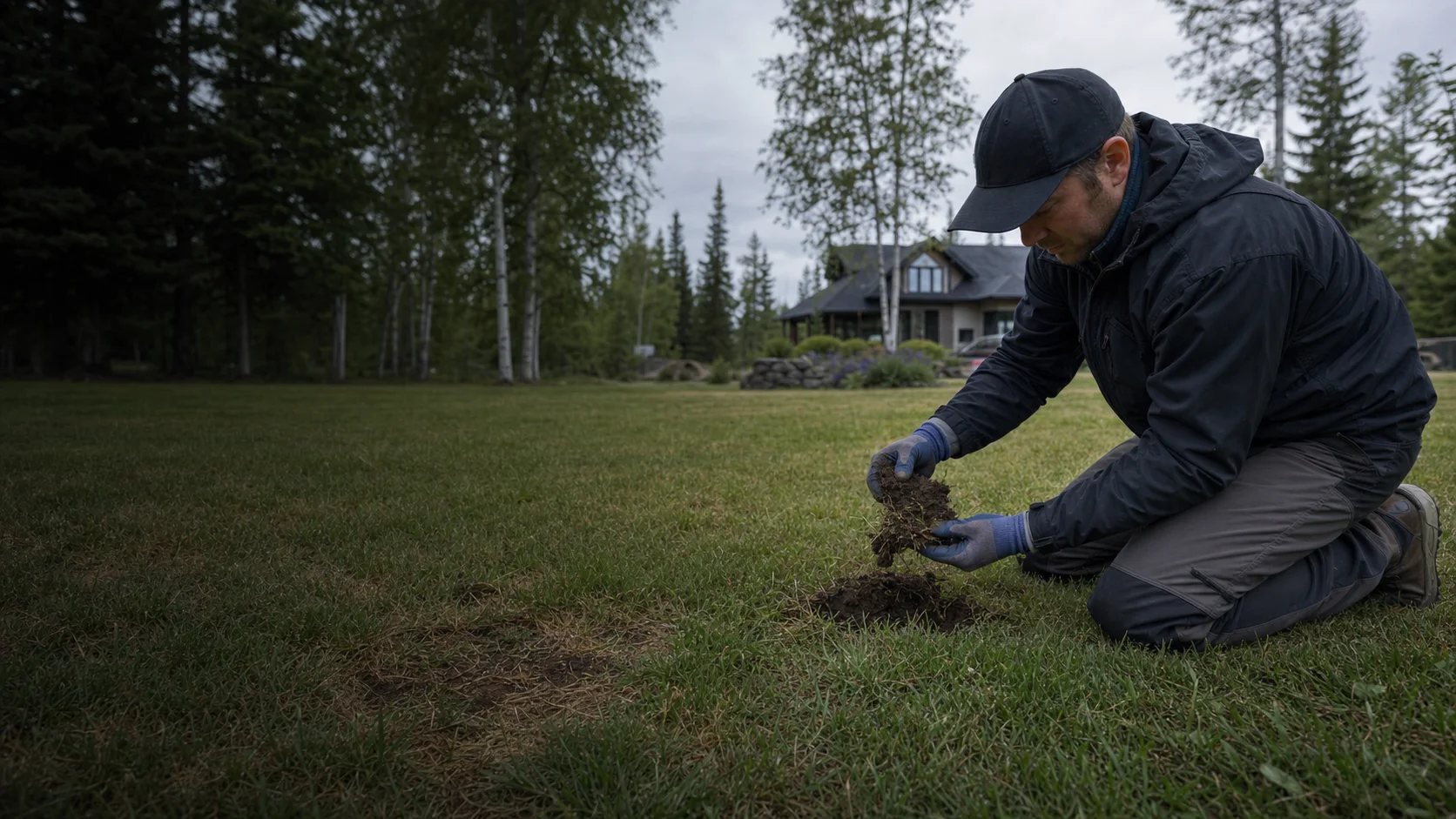
Show us the property

Start online for a residential lawn or send the site details for commercial, shop, farm, and acreage work. Address, access, approximate area, and the vegetation problem give the crew a useful first picture.

  • Property and access
  • Residential or commercial
  • What you need controlled

Step 02

Choose the right scope

A lawn plan, one-time service, or site-scoped vegetation program should match the property—not a generic route. Larger and mixed-use sites get a local review before the work is confirmed.

  • Lawns and acreages
  • Shops and managed yards
  • Farms and commercial sites
Property-sized scope
On the ground
4 application platforms

Step 03

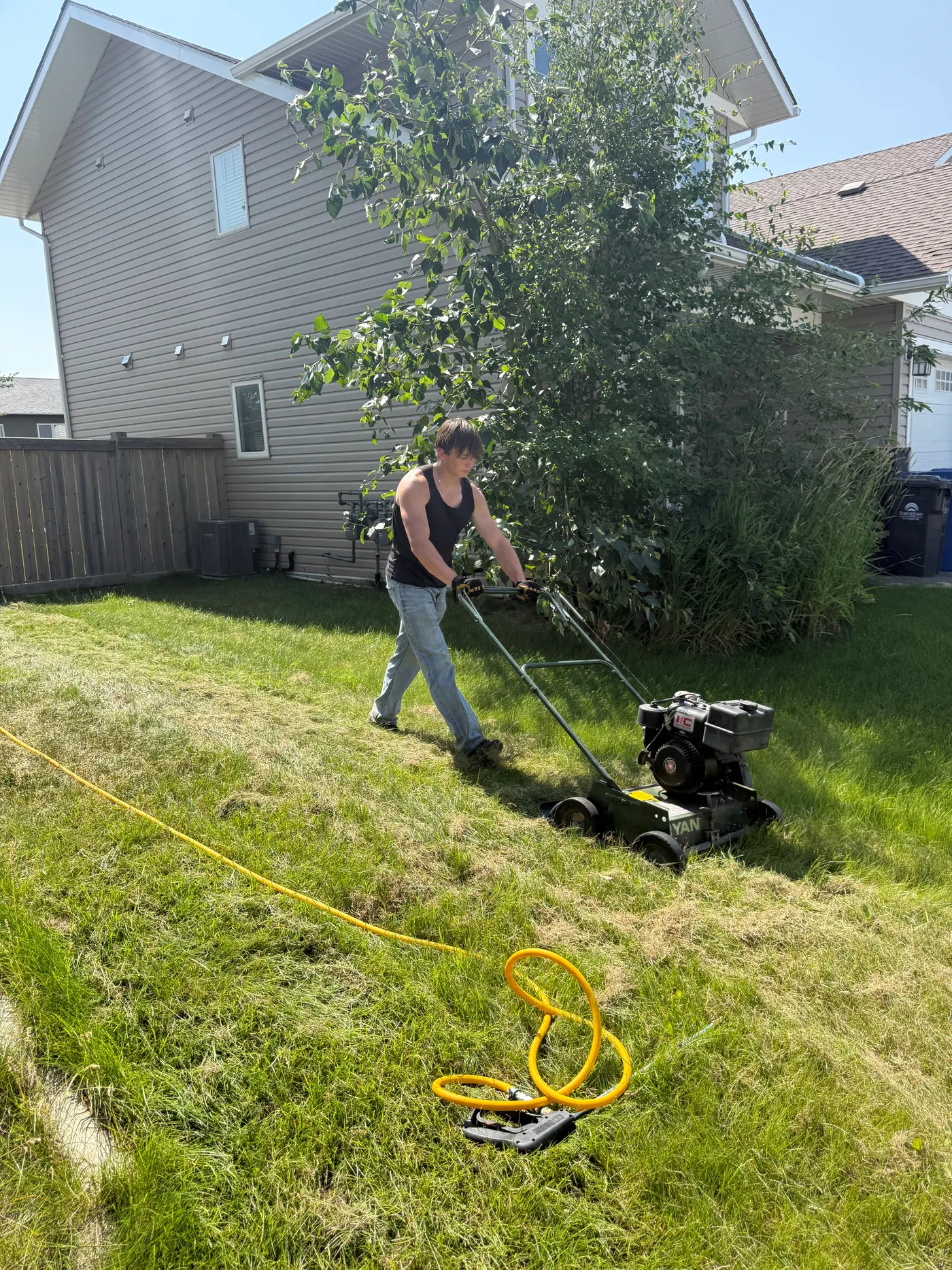
Match the unit to the ground

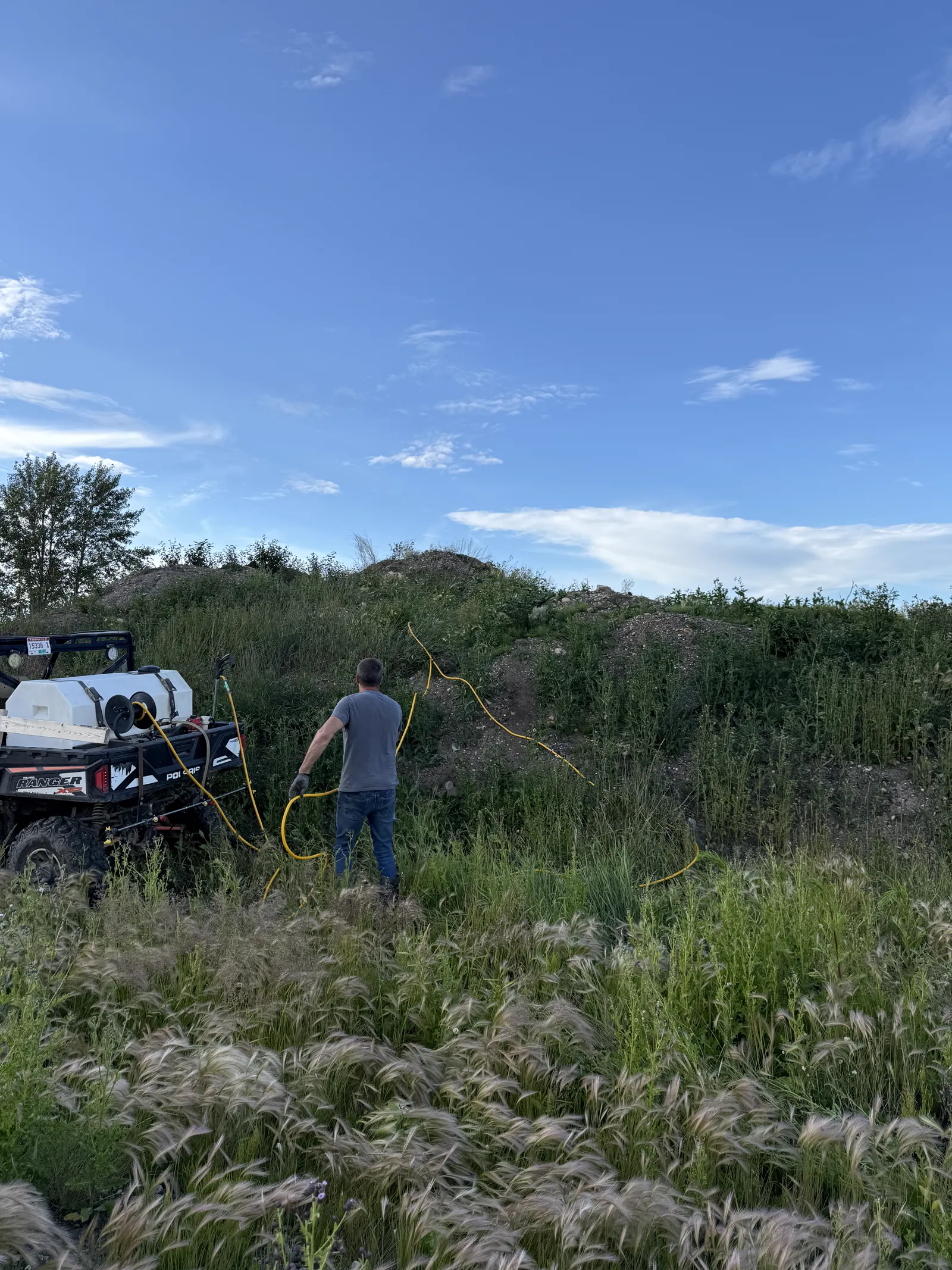
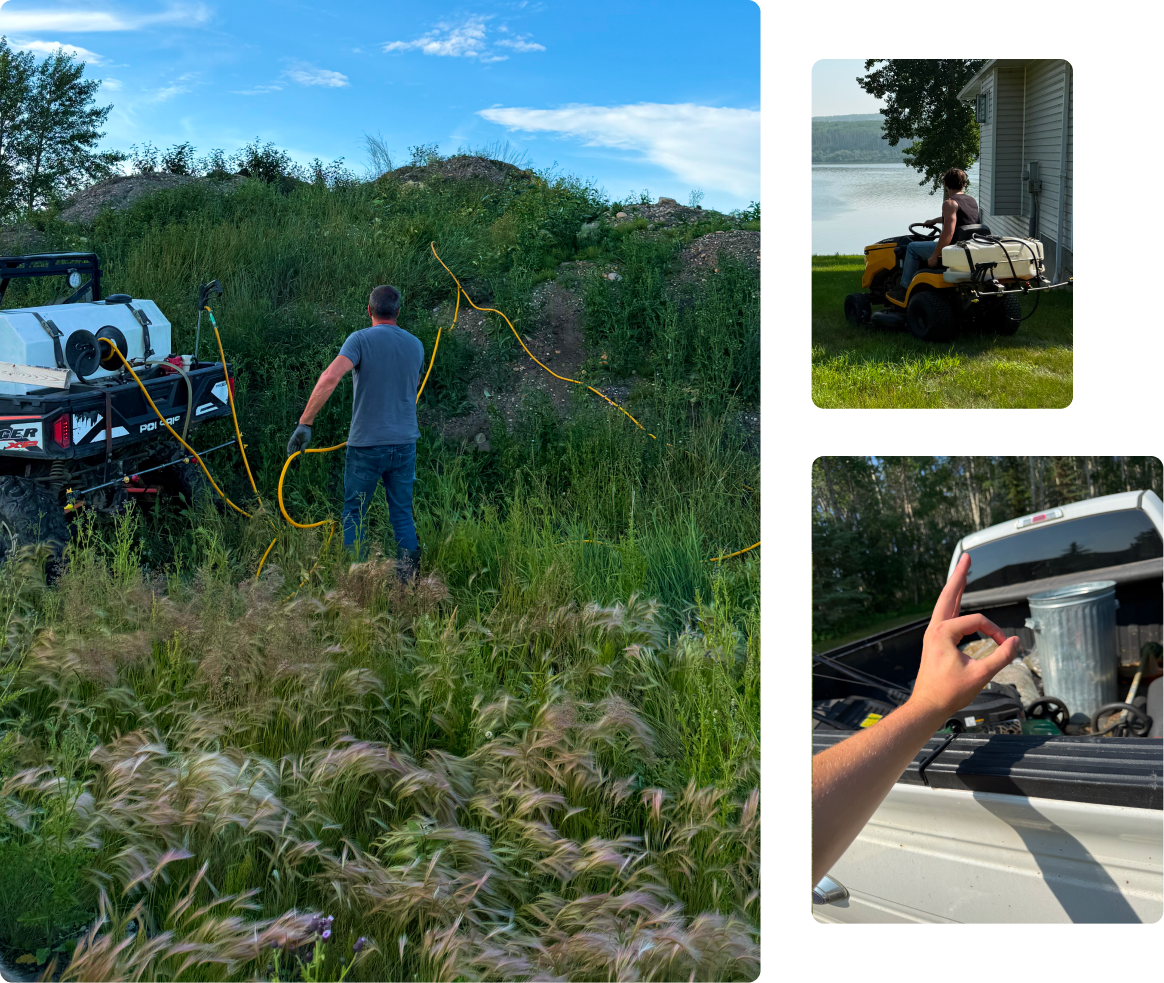
Tight residential access, open lawn, rough commercial ground, and long fence lines all move differently. The crew selects the platform that can cover the target cleanly and efficiently.

  • Truck-mounted units
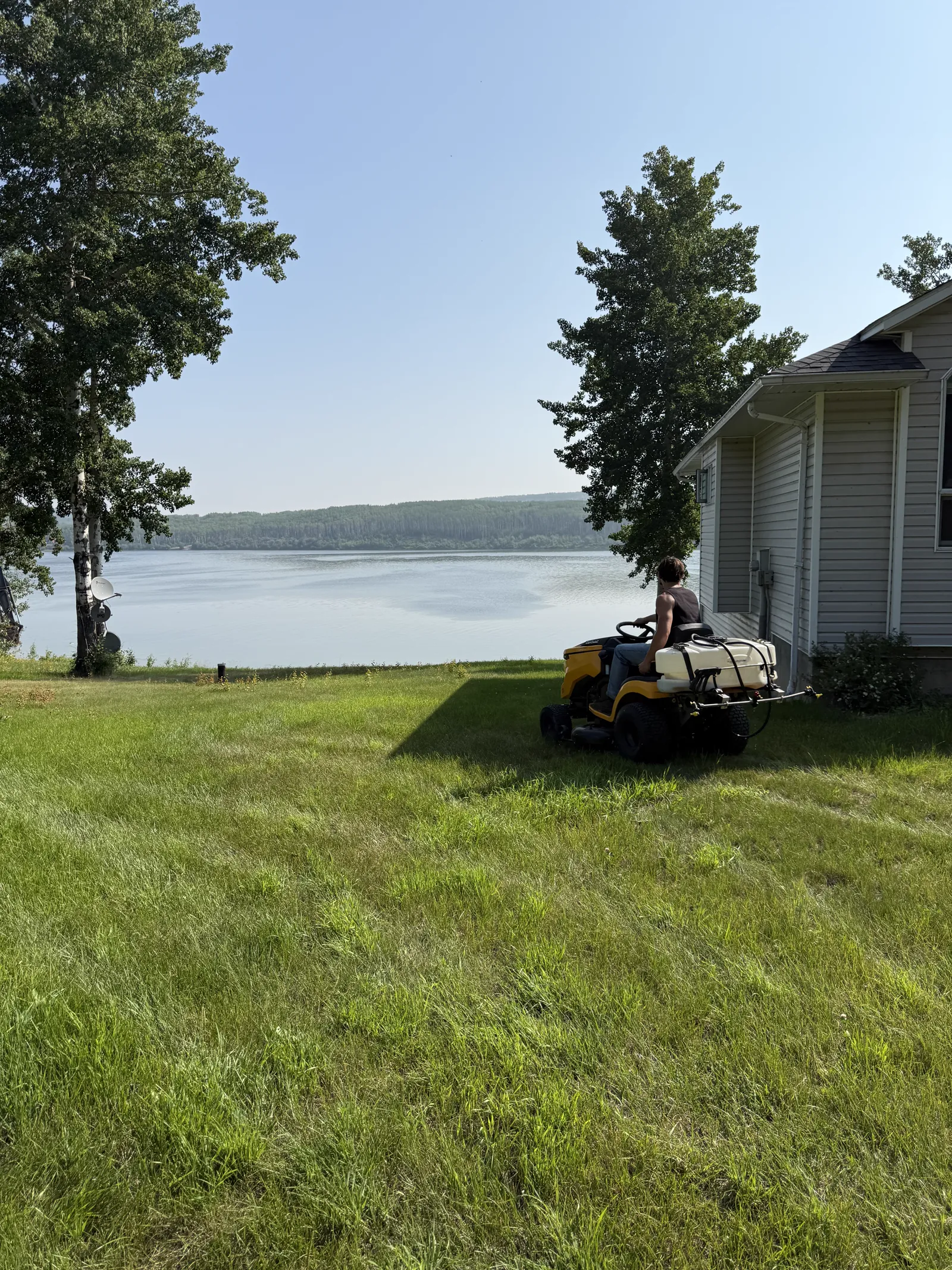
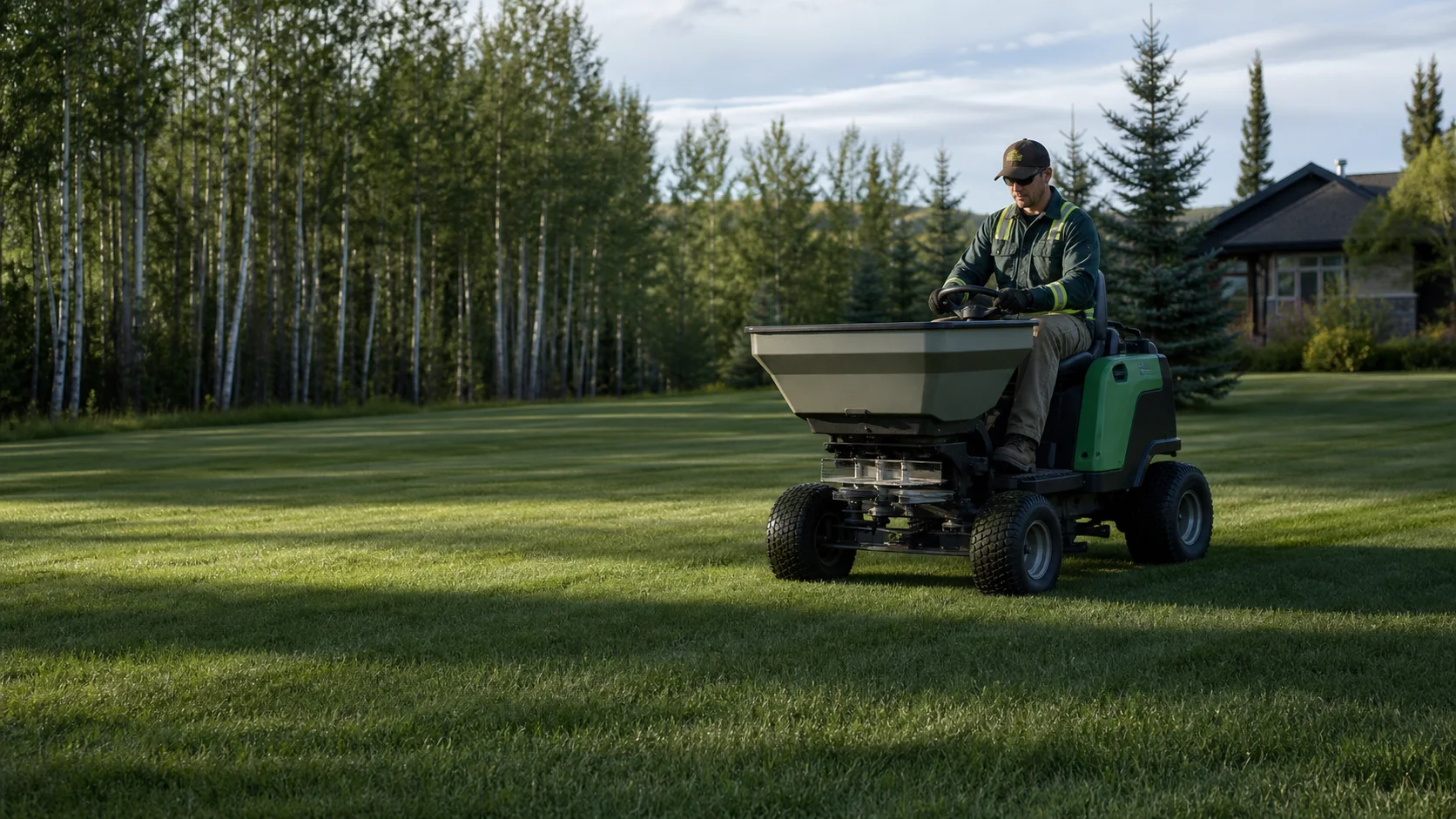
  • Ride-on units
  • Backpacks and side-by-sides

Step 04

Select the material for the target

Our professional toolkit includes Restore II, StartUp, Premium 3-Way XP, and Grazon XC. A certified applicator matches the material to the site, target vegetation, current registration, and label directions—never the other way around.

  • Turf broadleaf control
  • Non-selective control where appropriate
  • Range, pasture, and non-crop options
Label-guided selection
Tight-access capability

Step 05

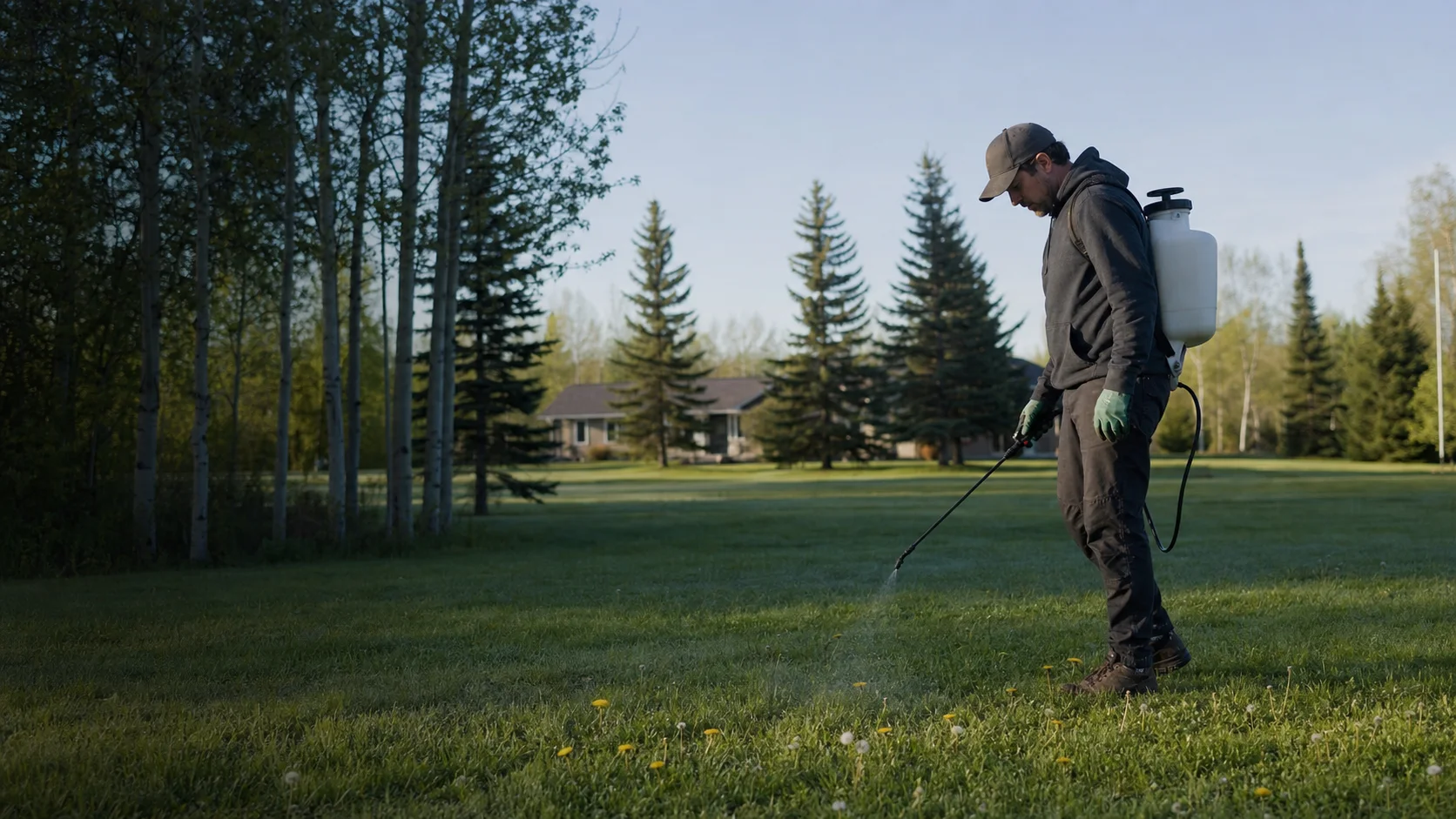
Work the spaces equipment cannot

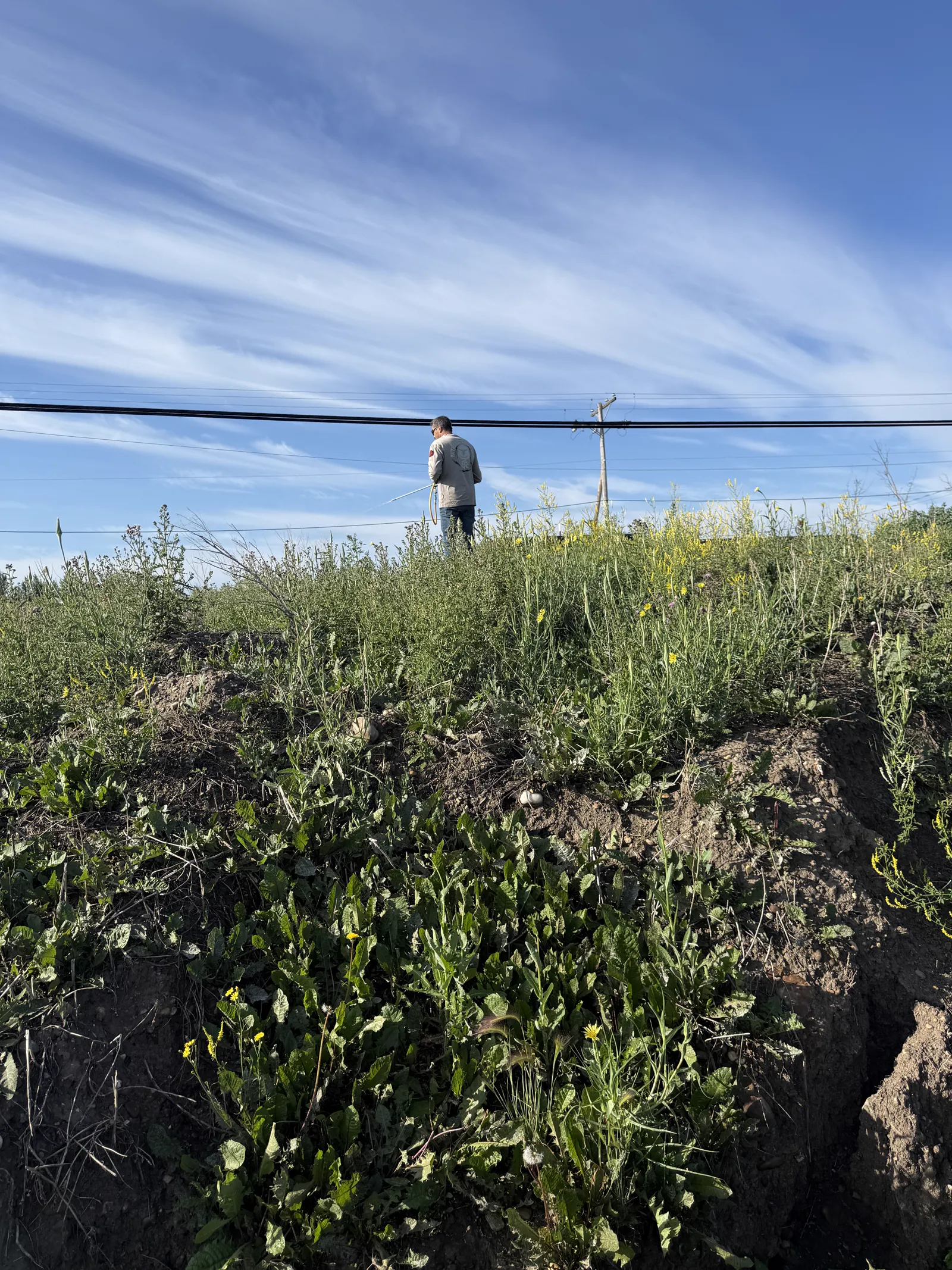
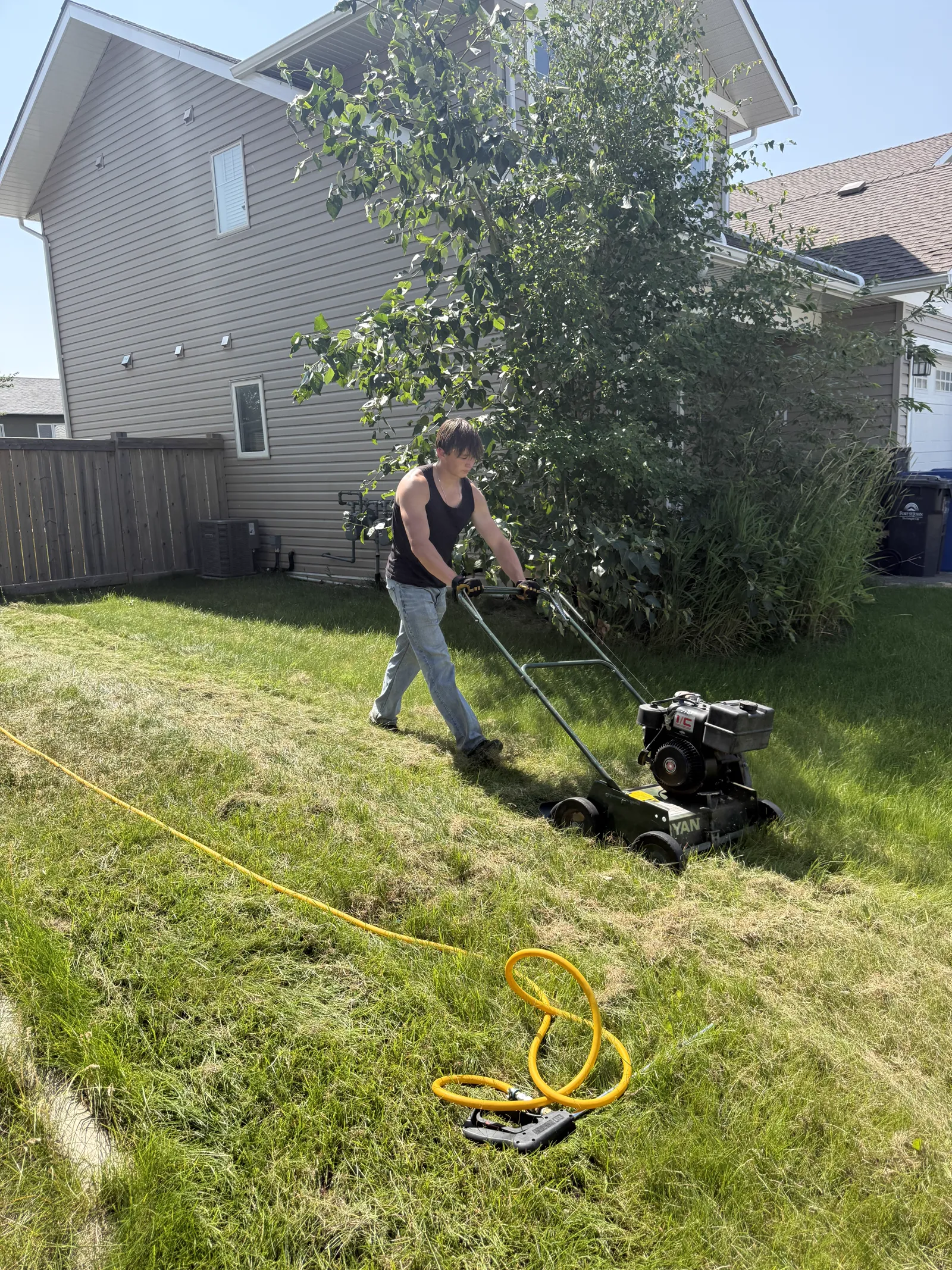
Backpack sprayers let the crew reach tighter edges, slopes, gates, and smaller treatment areas where a truck or ride-on unit would be clumsy.

  • Edges and fence lines
  • Gates and narrow access
  • Targeted application areas

Step 06

Scale up without losing the target

Ride-on and side-by-side units help cover open lawns, commercial yards, farm ground, and acreage efficiently while keeping the planned application area clear.

  • Open turf
  • Commercial ground
  • Acreage and farm access
Homes · shops · farms
After the application
Visit guidance included

Step 07

Leave clear next steps

Product-specific directions matter after the crew leaves. We communicate the useful watering, mowing, access, and return guidance for the service performed.

  • What was completed
  • What to do next
  • When to contact the crew

Step 08

Follow the result

Weather, growth stage, soil, and starting pressure affect how fast a property changes. The local team uses the visit history and what the ground is doing to recommend the next useful step.

  • Season-aware timing
  • Clear follow-up
  • No national call centre
One local point of contact
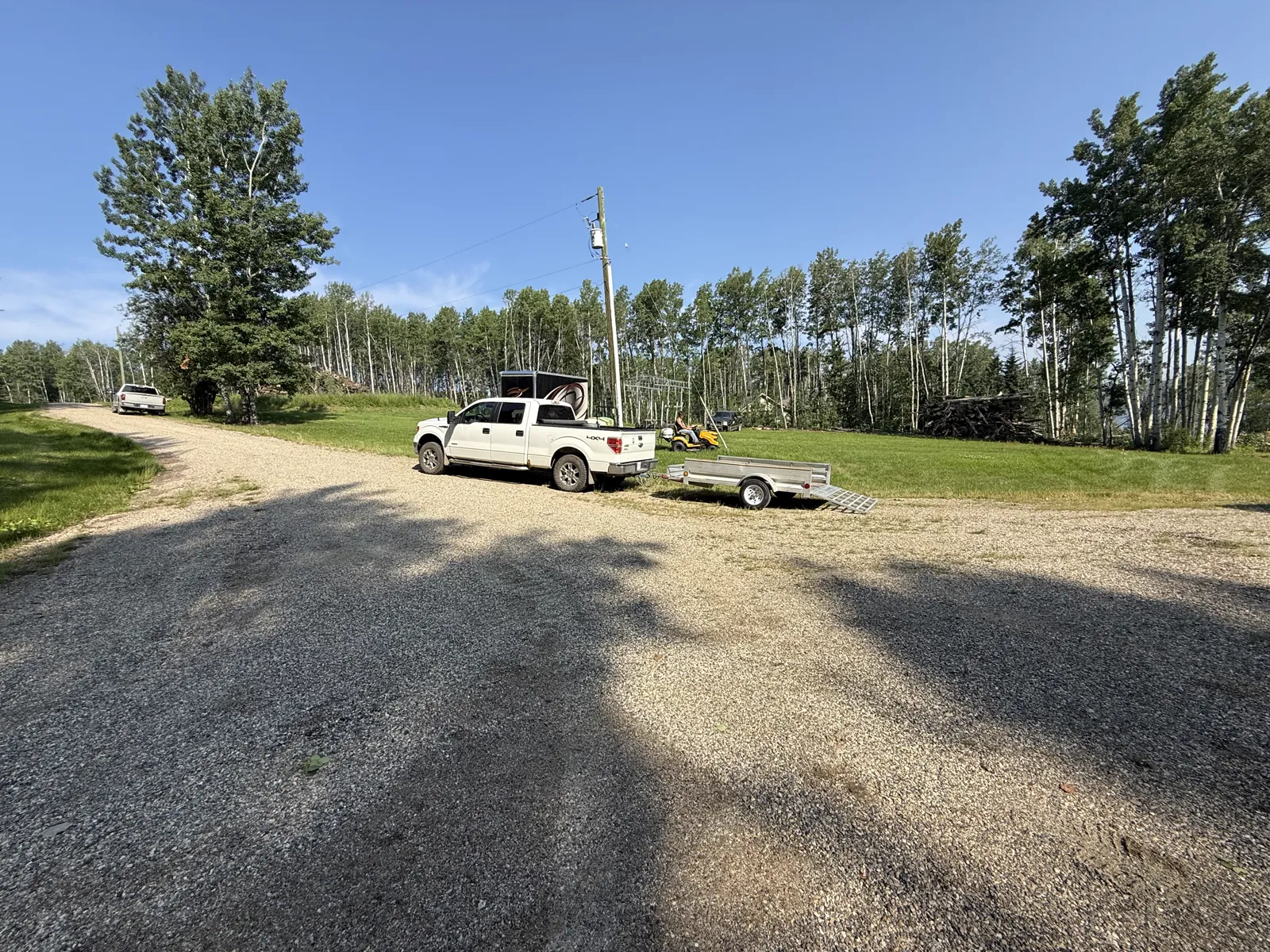
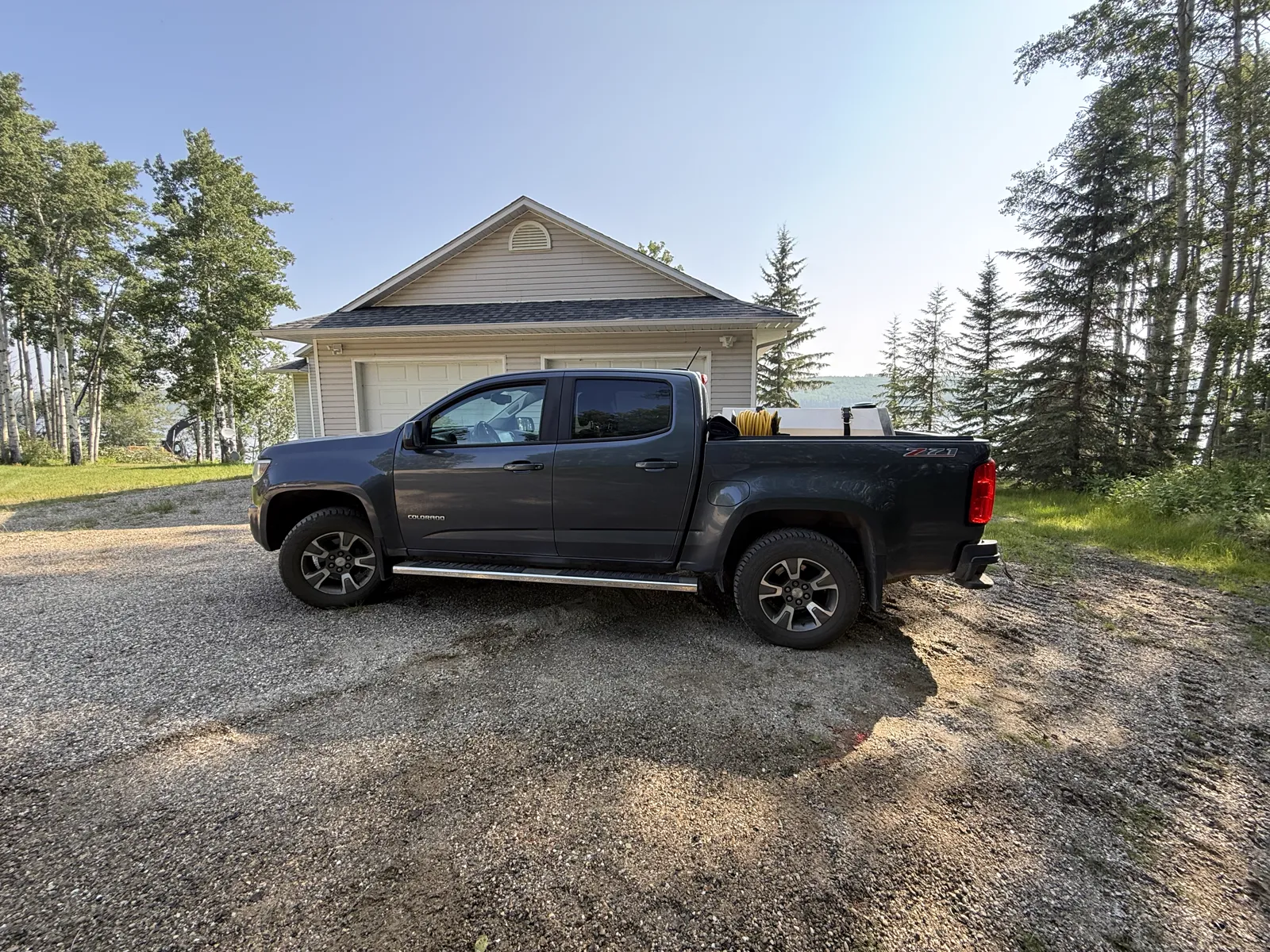
Dead Weed truck and application equipment arriving at a Peace Region property

Put the right unit on the right ground

From a Taylor lawn to a shop yard, farm, or acreage, start by showing us the property and the result you need.

Local crew. Real equipment →